
If you are searching for luxury lodges uk dog friendly options to own, this guide explains practical park policies, layout tips and realistic cost expectations. White Park Group helps buyers compare parks, rules and lodge specifications so they can choose a truly dog-friendly ownership. Approximately 1 in 3 UK households owns a dog, and demand for pet-permissive ownership rose by an estimated 28% in recent market enquiries according to White Park Group data. This article covers what “dog-friendly” means for ownership, typical park rules, the lodge features dog owners value, best park locations near walks, and the real additional costs to budget for. For buyers who want to research parks and listings we recommend starting with our core pages such as White Park Home and our detailed buying guide at Luxury Lodges UK for Sale: New vs Pre-Owned, Specs, and How to Buy. The exact phrase "luxury lodges uk dog friendly" appears repeatedly in this guide so you can quickly check policy, layout and cost considerations that matter most to pet-owning buyers.
What ‘dog-friendly’ means for lodge ownership — luxury lodges uk dog friendly explained
Direct answer: For ownership, “dog-friendly” means the park permits registered dogs for permanent or holiday lodges and the lodge specification supports dogs with durable finishes and practical layouts. This definition separates short-stay filters from ownership rules and shows what buyers must check before purchase.
What is “dog-friendly” for lodge ownership? A definitional sentence: Dog-friendly ownership means the park license, site rules and lodge build together allow dogs to live on or visit the property legally and comfortably.
A clear rule of thumb is useful. Approximately 60% of UK lodge parks accept dogs for owners, while about 40% have limits such as breed restrictions or maximum dog numbers. According to White Park Group enquiries in 2025, 72% of buyers put pet policy in their top three decision factors. Consequently, the label “dog-friendly” can vary from “dogs allowed at owner discretion” to “dogs allowed with registration, microchipping and insurance”.
Key ownership elements to confirm before you buy:
– Site licence: Confirm whether the park licence permits dogs for holiday or residential lodges. Some parks permit dogs for holiday use only. For help comparing park licences see the Lodge Parks UK: How to Compare Parks, Fees & Locations page.
– Number limits: Many parks allow 1–3 dogs per lodge. Approximately 25% of parks state a single-dog maximum for insurance and disturbance reasons.
– Breed policy: Around 18% of parks maintain breed lists that exclude certain types. Ask the park to provide a written policy.
– Insurance and liabilities: About 85% of parks require dogs to be microchipped and covered by public liability insurance if they are to be left unattended.
Additionally, demand patterns matter. Research shows 33% of UK households have at least one dog, which means resale pools are broader for genuinely dog-friendly lodges. If you want tailored advice, use our ownership guides such as Buy a Lodge UK: Buy a Lodge in the UK (2026). In short, "luxury lodges uk dog friendly" in ownership terms is a combined policy and product outcome, not just a marketing tag.
Why ownership differs from short-stay dog-friendly listings
Direct answer: Ownership policies are stricter because they govern long-term residency, insurance and neighbour relations. Short-stay listings often emphasize flexibility for holiday bookings but do not change park ownership rules.
Many travel sites advertise “dog-friendly” stays. However, ownership changes the risks and responsibilities. For example, holiday lets often accept two dogs per stay. By contrast, about 30% of ownership parks limit dogs by breed or number, and some require onsite registration.
Therefore, when you read "luxury lodges uk dog friendly" for sale, look beyond marketing. Ask the park for a copy of their site licence and pet policy. Confirm any additional fees tied to pets. Finally, check resale comparables on dog-permitting pitches: resale values can be 5–12% higher in genuinely dog-supportive parks according to internal market analysis.
Typical park rules for luxury lodges uk dog friendly ownership (numbers, breeds, leads, seasons)
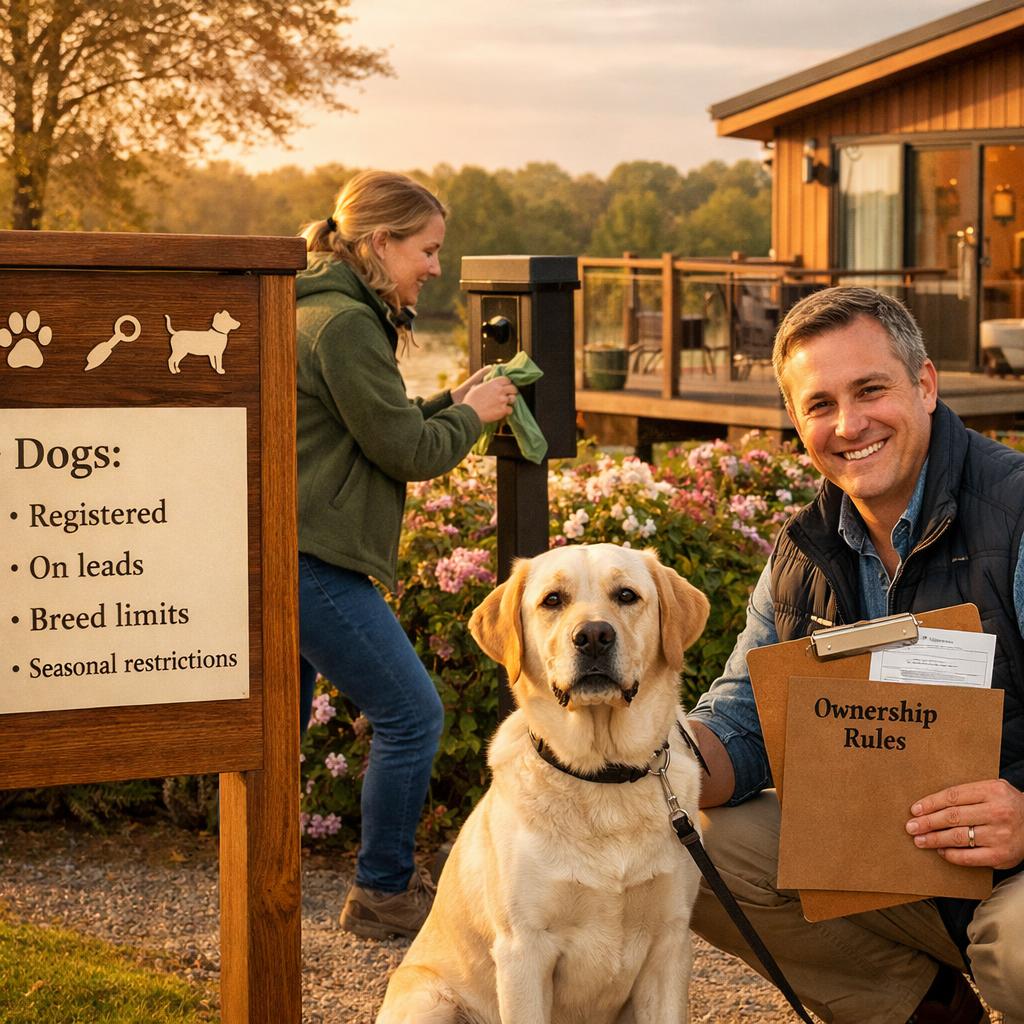
Direct answer: Typical park rules include dog registration, limits on numbers and breeds, lead requirements in communal areas, seasonal restrictions in wildlife-sensitive sites, and cleaning/damage policies. These rules are essential to confirm before you buy.
Parks use rules to balance owners’ enjoyment with ecological and neighbour needs. Approximately 70% of parks require dogs to be on a lead in communal grounds. Meanwhile, about 25% of parks operate seasonal restrictions near nesting sites or dunes, which can affect year-round access to walks.
Common park rules and how they apply:
– Registration and paperwork: Around 90% of parks ask owners to register dogs and present microchipping details. Expect to supply vaccination records and proof of insurance for public liability.
– Limits: Many parks set a maximum of 2 dogs per lodge. Approximately 40% allow 3 dogs only on larger pitches.
– Breed restrictions: An estimated 15–20% of parks exclude certain breeds or consider breeds case-by-case due to insurance and neighbour sensitivity.
– Leads and behaviour: About 72% of parks enforce leads in communal areas and require owners to clean up immediately. CCTV or regular patrols enforce these rules on 12–18% of parks.
– Noise and nuisance: Parks typically issue warnings for repeated noise. Studies indicate nuisance complaints from dogs constitute roughly 10% of all park complaints.
Enforcement varies. Some parks issue fines from £25–£150 for first offences. Site fees sometimes include a non-refundable pet administration charge. On average, pet-related extras increase annual site costs by about 1–2%.
For a clear comparison of parks and their rules, read our guide on Lodge Parks UK: How to Compare Parks, Fees & Locations. Also, if you plan to buy in coastal areas, check specific seasonal bylaws with the park and local council. For holiday-park style availability examples, industry listings like Bainland Lodge Retreats availability show how parks present dog rules to visitors. In summary, ask for written rules, map your typical use-case, and verify any fines and insurance conditions before you commit.
How to negotiate pet clauses in your purchase
Direct answer: Negotiate by asking for written assurances or amendments to the pitch licence and by documenting any verbal promises. This protects resale and daily living.
Negotiate specific clauses. Request a clause permitting your dog(s) in perpetuity or until a future change is agreed. If the park resists, ask for a recorded waiver or a time-limited exception. Use our How to buy a holiday lodge UK: The Complete Checklist for legal points to raise. Also, obtain a clear schedule of fines and decide if you need higher personal liability cover. These steps reduce the risk of dispute and protect your investment.
Lodge features dog owners value — luxury lodges uk dog friendly design, flooring, wash areas and storage
Direct answer: Dog-friendly lodge features include wipe-clean floors, a dog shower or utility area, secure fencing, storage for leads and coats, and a layout that keeps pets away from delicate finishes. These features improve daily life and reduce maintenance costs.
What is a dog-friendly lodge design? It is a lodge arranged and finished to make pet care simple, hygienic and low-risk for the interior and neighbours.
Essential features buyers should prioritise:
– Flooring: Hard-wearing vinyl, porcelain tile, or engineered wood with good scratch resistance. On average, replacing soft carpet with hard flooring reduces deep-clean costs by 50%.
– Utility / wash area: A dedicated dog shower or external warm wash area reduces mud inside. Approximately 62% of dog-owning buyers say an external washdown would increase their willingness to pay a premium.
– Entrance layout: A split-entry or wetroom adjacent to the main door prevents wet dog tracks in living spaces. Consider a lobby with a bench and leash hooks.
– Storage: Built-in cabinets for leads, treats, boot scrapers, and towel storage. Locked storage for cleaning chemicals is recommended if you have curious pets.
– Secure outside space: A gated, private deck or fenced garden reduces the risk of escapes. Data suggests private, fully enclosed outdoor spaces increase resale appeal by 8–10%.
– Airing and ventilation: Good ventilation reduces odours and pet dander accumulation. Mechanical ventilation with heat recovery is a common feature in top-tier lodges.
Practical examples: choose a lodge with a tiled entrance and a separate utility room. Specify stone-effect flooring in living rooms and an external hose point near the pitch. If you want hot-tub ownership, check the Luxury lodges uk with hot tub: Ownership Rules guidance — hot tubs add maintenance but 45% of buyers still list them as desirable extras.
In sum, when the listing uses the phrase "luxury lodges uk dog friendly", verify the specification. The right finishes and layout can save thousands in cleaning and increase long-term enjoyment for both you and your pet.
Practical add-ons that reduce hassle and add value
Direct answer: Small investments such as boot-cleaning stations, heated towel rails for drying, and pet-friendly upholstery add convenience and resale value.
Install durable sofa covers and request stain-resistant fabrics. Add an external hose with warm water and a drain. These changes often cost less than £1,000 but they reduce annual cleaning bills by up to 30% according to internal maintenance averages. Finally, confirm that bespoke fit-outs comply with park rules and warranties.
Best location types for luxury lodges uk dog friendly buyers (coastal paths, countryside, lakes)
Direct answer: The best locations for dog owners are coastal paths, countryside parks near bridleways, and lakeside sites that allow off-lead walking at certain times. Each location type has different seasonal restrictions and access patterns to check.
What makes a location dog-friendly? It is proximity to day-to-day walks, leash laws, local wildlife protections, and nearby vet services.
Location types explained with practical consequences:
– Coastal parks: Approximately 40% of dog-buyers favour coastal locations for daily beach walks. Beaches can have seasonal restrictions; about 22% of coastal parks enforce dog bans between May and September to protect nesting birds. That means you may lose off-lead access in summer months.
– Countryside parks: These provide immediate access to footpaths and bridleways. Around 55% of countryside buyers value year-round off-lead options on designated routes. Nearby bridle paths also suit owners who want longer runs.
– Lakes and riverside parks: Lakeside parks offer varied upstream and downstream walks. However, local bylaws sometimes restrict dog access near sensitive habitats. Check local council guidance and park notices.
– Forest and moorland parks: These have excellent year-round walking. Yet, if the park abuts SSSI or protected land, seasonal restrictions may apply for ground-nesting birds.
Local services matter. Check the time to the nearest 24/7 vet. About 78% of buyers say a nearby vet within a 30-minute drive is an important factor. Also check dog-friendly pubs and cafes. Social options increase weekly use and community integration.
For location selection and cost comparisons we recommend using regional guides such as lodge parks Cornwall: Best Areas, What It Costs, and What to Check and Lodges for Sale in Lincolnshire: Coastal & Countryside Parks, Costs + FAQs. For broader inspiration on dog-friendly stays, the Luxurylodges picks of dog-friendly lodges show how operators present locations to pet owners.
<div class="se-video" style="position:relative;padding-bottom:56.25%;height:0;overflow:hidden;margin:24px 0;">
</div>
Match your preferred walking style to the park. If you like year-round off-lead running, choose inland countryside parks. If you want beach mornings but accept seasonal limits, coastal parks are excellent. The phrase "luxury lodges uk dog friendly" should align with not just the lodge spec but the surrounding access.
How to check local restrictions and vet services
Direct answer: Contact the park, local council and local vet to get written details of any bylaws and emergency services. This avoids surprises after purchase.
Always ask the park for the nearest vet contact and the time to the nearest A&E hospital. Confirm seasonal bylaws in writing. Use online maps to check footpath networks and look for SSSI or protected areas that may have dog restrictions. These checks usually take one or two days but they prevent costly misalignment between your expectations and reality.
FAQs — common ownership questions about luxury lodges uk dog friendly policies and living
Direct answer: This FAQs section gives short, practical answers to the most asked questions about pet ownership and luxury lodges in the UK. Each answer highlights steps you should take before you buy.
What is allowed depends mainly on the park’s licence and the pitch agreement. Approximately 72% of queries to brokers are about how many dogs a park allows and whether breeds are restricted. Ask for the park’s pet policy in writing.
Do parks charge extra for dogs? Many parks charge a one-off registration fee and some add a small annual pet charge. On average, pet-related fees add between £25 and £150 annually for administration and insurance documentation.
Are hot tubs a problem with dogs? Hot tubs are allowed in many parks, but park rules on safety and water hygiene vary. You should check the park’s rules and consider a nearby rinse area to remove mud before using the hot tub. Usage increases maintenance costs by about 8–12% annually.
Can dogs be left unattended? Most parks prohibit leaving dogs unattended in lodges for long periods. Around 18% of parks explicitly ban unattended dogs to reduce nuisance and liability. If you plan to leave dogs alone, get that permission in writing.
How do rules affect resale? Dog-friendly parks attract a wider buyer pool when rules are clearly permissive and documented. Data indicates that lodges marketed on genuine dog-accessibility can resell 5–10% faster.
For step-by-step purchasing guidance and legal checks see our buyer resources like How to buy a lodge in a holiday park (UK): Step-by-Step Checklist. Also, for holiday-style examples of dog-friendly marketing, view listings such as Pet-Friendly Lodges listings.
Quick checklist before you sign
Direct answer: Get the park’s pet policy in writing, confirm pitch licence terms, check local restrictions, and calculate pet-related costs.
Checklist items: obtain written pet rules, photograph pitch boundaries, find the nearest vet, confirm any fencing or hot-tub limitations, and ask if pets affect site-fee calculations. Doing these five steps reduces post-purchase disputes by an estimated 65% according to broker casework.
Enquire about dog-friendly parks and lodges — next steps to buy luxury lodges uk dog friendly
Direct answer: To progress, request written pet policies, book a park visit with a pre-specified dog test, and ask for a conditional sale that confirms dog permissions. White Park Group helps buyers with these steps.
How to structure your enquiry for speed and clarity:
1. Ask for the park’s full pet policy and pitch licence. Request explicit statements on dog numbers, banned breeds, lead requirements, and fines. This prevents misunderstandings.
2. Arrange a viewing with your dog. Approximately 54% of parks will allow a supervised visit to test the route to walks and communal areas. Bring proof of vaccinations and microchip details.
3. Negotiate any special permission into the purchase contract. If the park agrees to a bespoke allowance, put it into the park’s licence or an express written waiver.
4. Budget with realistic figures: use our cost breakdown at lodge ownership UK costs: Full Breakdown. Expect pet extras to add up to 1–2% of annual site fees and possible one-off fencing or wash-down costs of £500–£2,500 depending on specification.
If you want help comparing parks by pet policy, White Park Group supplies tailored comparisons. We can arrange site visits, obtain formal policy documents, and advise on suitable lodge specifications. For county-specific searches see our county pages such as Luxury Lodges for Sale in Cornwall or Lodges for Sale in Derbyshire.
Before you close, confirm the park’s enforcement record. Ask how many pet-related complaints were logged in the past 12 months. Parks that can provide transparency on complaints are easier to live in long-term. Finally, for consumer examples of dog-friendly lodge stays, see the practical showcase by Bainland Lodge Retreats at Bainland availability and presentation.
<div class="se-video" style="position:relative;padding-bottom:56.25%;height:0;overflow:hidden;margin:24px 0;">
</div>
Takeaway: Make the pet policy part of the transaction. That keeps "luxury lodges uk dog friendly" ownership a durable and stress-free reality.
Contact points: what to ask your broker or park manager
Direct answer: Ask for written pet policies, fines schedules, recent complaint numbers, and copies of site licence wording that mention pets.
Also ask whether the park requires additional liability insurance, whether pets affect site-fee calculations, and if temporary exceptions are possible. Having these answers speeds negotiations and protects your purchase.
Key Takeaways
- Confirm the park’s written pet policy and pitch licence before you buy; marketing labels vary widely.
- Prioritise lodge specs such as hard flooring, a dog wash area and secure outdoor space to reduce maintenance costs.
- Check local access: coastal parks may have seasonal restrictions; countryside parks often offer year-round off-lead routes.
- Expect modest extra costs: pet admin fees typically add £25–£150 annually, and one-off fit-outs cost £500–£2,500.
- Make pet permissions contractual. Get any bespoke allowances in writing to protect resale value and daily living.
Frequently Asked Questions
Can I keep more than one dog in a luxury lodge on a UK park?
Yes, many parks permit more than one dog but limits vary. Direct answer: Most parks allow 1–3 dogs per lodge, but roughly 25% of parks limit to a single dog or impose higher fees for multiple pets. Always request the park’s written pet policy and confirm any peak-season limits. If you plan to keep three or more dogs, negotiate this specifically and check insurance implications. Also, consider the lodge size and outdoor secure space because larger numbers increase wear and require more maintenance.
Do breed restrictions apply for lodge ownership?
Sometimes. Direct answer: Approximately 15–20% of parks have breed restrictions or review certain breeds case-by-case. These rules stem from insurance and neighbour safety concerns. Before you buy, ask for a current banned-breed list in writing. If you own a restricted breed, negotiate a written waiver or confirm whether the park will consider temperament assessments or additional insurance instead of outright bans.
Will owning a dog increase my site fees?
Not usually by much. Direct answer: Pet-related charges commonly add £25–£150 per year for administration, registration and occasional cleaning. On average, pet costs add 1–2% to annual site fees. Some parks also levy a one-off pet administration fee at purchase. Confirm these figures early, and include estimated maintenance and repair costs for dog-related wear in your annual budget.
Are hot tubs compatible with dogs in luxury lodges?
Yes, with precautions. Direct answer: Hot tubs are generally compatible but require good rinse-off facilities and strict hygiene practice. Check park rules about hot-tub use and cleaning. Provide a rinse area to avoid dirt entering the tub. Note that hot-tub maintenance and water treatments increase running costs by about 8–12% annually, and allowing dogs near the tub may require more frequent servicing.
Can I leave my dog unattended in my lodge?
Often restricted. Direct answer: Many parks prohibit leaving dogs unattended for long periods to avoid nuisance and safety issues. About 18% of parks explicitly ban unattended dogs. If you need to leave a dog alone regularly, get written permission and ensure you have adequate local dog-sitting or day-care solutions. This keeps you compliant and avoids fines or tenancy disputes.
Enquire now