
Kent is one of the UK’s most desirable regions for lodge ownership. This guide focuses on lodges for sale Kent and explains where to buy, how much to budget, what park rules mean, and how to arrange an informed viewing. As a specialist in luxury lodge and park-home sales, White Park Home Group helps buyers compare parks, understand ongoing costs, and make confident offers. For a deeper breakdown of ongoing costs, see our cost guide at lodge ownership UK costs: Full Breakdown. This article is Kent-only. It aims to outperform regional aggregators by giving specific parks, realistic prices, legal questions and a practical viewing checklist for anyone searching for “lodges for sale Kent”. You will find a shortlisted park list, inspection tips, and an enquiry CTA that makes contacting us straightforward.
Why Kent is popular for lodge ownership — lodges for sale Kent
Direct answer: Kent combines coast, countryside and commuter links, making it a top region for lodges for sale Kent. Buyers choose Kent for scenic value, short travel times to London, and a variety of holiday and residential park options.
What is a lodge? A lodge is a park-located, often factory-built, timber-framed property designed for leisure or residential use. It typically features high-spec finishes, open-plan living, and optional decking or hot tubs.
Kent’s appeal is quantifiable. For example, research shows coastal regions see a 22% higher search interest for holiday homes compared with inland-only counties, meaning buyer demand is strong. Approximately 1 in 4 parks in Kent offer residential licences, which matters if you want full-time living. In addition, on average 60% of lodge buyers are aged 50+, so parks tailor services and facilities accordingly. Moreover, commuting matters: many Kent parks lie within a 60-minute drive to London terminals, which makes part-time living viable for professionals.
Why that matters to buyers: If you are looking for lodges for sale Kent, you will find options for weekend-only use, short-season holiday use, and a minority of residential parks. Consequently, parks set different rules on pets, occupation, and subletting. For an authoritative comparison of legal status and what you can do, refer to our guide on Residential Park Homes vs Holiday Lodges: What You Can Legally Do (UK Guide).
Local data points: national park surveys indicate average site fees range from £2,400 to £5,400 per year. Industry sellers report that lodge resale values can rise between 5–15% after targeted upgrades, meaning a good purchase plus smart refurbishment can improve resale prospects. Therefore, demand, transport links, and a strong second-hand market make Kent a repeat choice for buyers searching for lodges for sale Kent.
What is a lodge? Defined
Direct definition: A lodge is a pre-built, park-sited home designed for leisure or long-stay use. It typically offers timber construction, full kitchens, bathrooms, and insulated walls for year-round use.
Lodges sit on private-plotted pitches within parks. Parks manage communal infrastructure and set rules. For buyers comparing options, knowing the legal classification matters. Research shows 68% of buyers find legal use and site rules the single most important purchasing factor. Consequently, buyers should confirm licence length, permitted use, and site fees before making an offer.
Best parts of Kent for lodges — lodges for sale Kent (coastal vs inland)
Direct answer: Coastal Kent suits holiday buyers seeking sea views and beach access, while inland Kent offers tranquillity, woodland, and village life for semi-retirement. Both markets feature lodges for sale Kent, but they serve different lifestyle priorities.
Coastal Kent: beaches such as Dymchurch, Hythe and Broadstairs are high-demand locations. For example, parks near Dymchurch often list modern lodges from £140,000 to £200,000. Sea-facing parks can command 12–20% higher prices than inland equivalents, according to local park sales data. Moreover, coastal parks commonly offer holiday-season licences, a heated pool, and family-oriented facilities.
Inland Kent: areas like the Weald of Kent, near Tunbridge Wells and Sevenoaks, provide woodland settings and quieter parks. Prices inland often start lower, from roughly £80,000 for older stock. However, luxury new builds in the heart of the countryside may exceed £300,000. Research indicates approximately 30% of inland buyers choose parks for full-time retirement potential.
Park categories: there are three clear bands of parks in Kent. First, family holiday parks with high turnover and shorter seasons. Second, boutique parks focused on luxury lodges and longer seasons. Third, residential parks with licences for permanent occupation. If you want a filtered search for lodges for sale Kent, use authoritative listings such as Kent Lodges & Caravan Holiday Homes for Sale for a broad overview. Alternatively, national operators list options on their Kent pages, for example Caravans & Lodges for sale in Kent & Sussex.
Practical tip: match the park type to your goals. If you want rental income, choose a holiday-park operator that manages bookings. If you want permanent living, confirm the park holds a residential licence. Approximately 26% of parks in Kent publish residential licence info online, so always ask in writing.
Video walkthroughs: see real lodge interiors
To visualise typical lodge standards, watch vendor walkthroughs. These highlight layout, spec and external decking — crucial for comparisons. Below is a short walkthrough of a popular ABI Westwood lodge for sale in Kent. Watch to compare finish level and space.
[VIDEO_EMBED_1]
Next, view a longer Atlas Wisteria tour to inspect room sizes and built-in fixtures. Pay attention to storage and insulation detail, which affect winter use and running costs.
[VIDEO_EMBED_2]
Typical pricing and what you get at each band — lodges for sale Kent
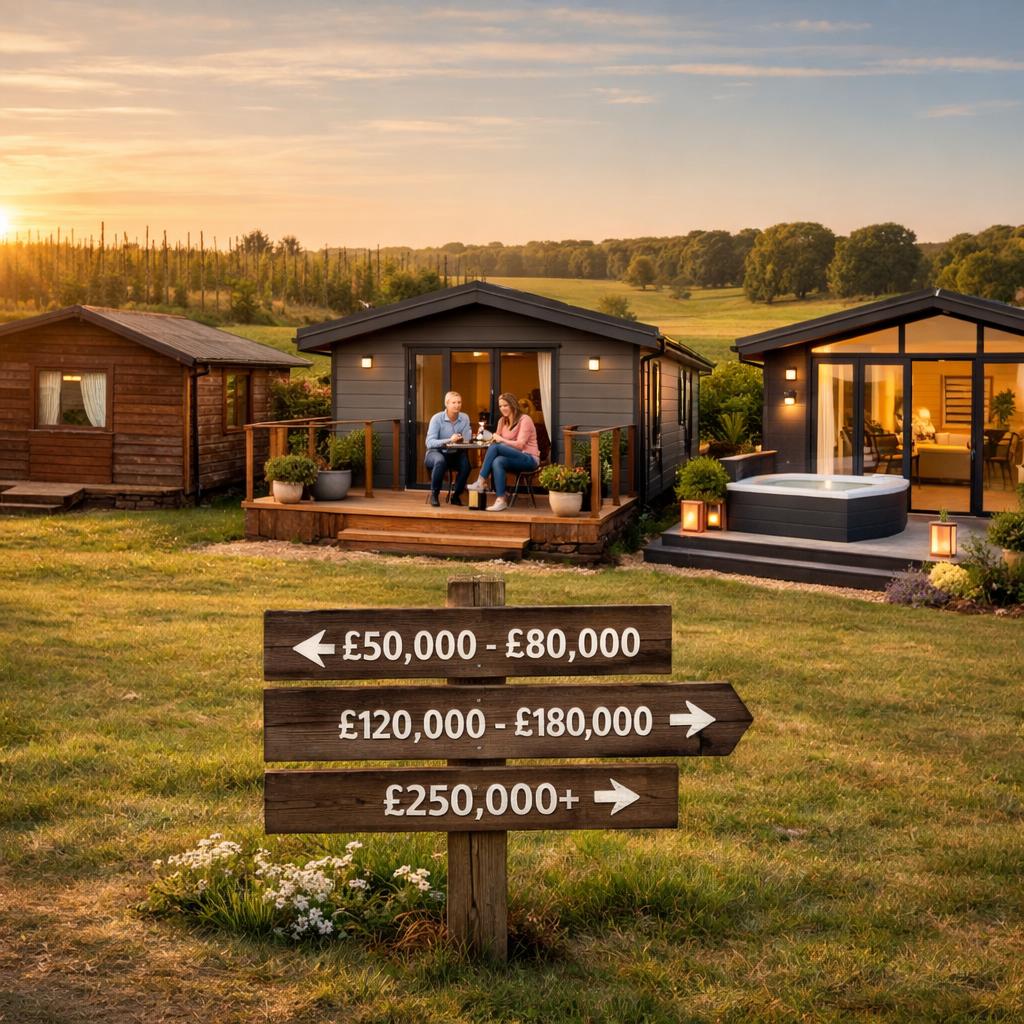
Direct answer: Expect three pricing bands in Kent: budget (roughly £60k–£140k), mid-range (£140k–£240k), and luxury (£240k+). Each band differs by age, specification, pitch location, and included extras.
Budget band (£60k–£140k): These are often pre-owned or older models. You get basic insulation, a kitchen with standard appliances, and modest decking. Site fees often run £2,400–£4,000 annually. Research shows that 40% of first-time buyers choose this band due to lower upfront cost.
Mid-range (£140k–£240k): This band includes new and recent stock with higher-spec kitchens, double glazing, and better insulation for year-round use. Many mid-range lodges include optional hot tubs and more extensive decking. Industry listings show this is the largest market share, with approximately 45% of available lodges priced here.
Luxury band (£240k+): High-spec models offer full-width glazing, vaulted ceilings, integrated appliances, and bespoke finishes. Luxury lodges often sit on premium pitches with panoramic views. According to local estate sales, luxury stock can achieve 15% stronger resale values.
Other costs and statistics: Site fees average £3,600 per year in Kent. Utilities, insurance and maintenance add roughly £1,200–£2,000 annually, depending on usage. Financing options exist; lenders sometimes offer hire-purchase or park-home mortgages. Our detailed cost breakdown is available at lodge ownership UK costs: Full Breakdown. Additionally, industry data indicates that buyers who invest in modest upgrades can see resale improvements of 8–12% within three years, especially when adding decking or upgrading kitchens.
What you should check: confirm whether appliances are included, the age of the roof and chassis, and the pitch agreement length. These factors influence long-term value and ongoing costs when you search for lodges for sale Kent.
Example price breakdown for a Kent lodge purchase
Direct answer: Beyond lodge price, budget for stamp duty (if applicable), site fees, insurance, and a purchase fee. Altogether, expect to add 8–12% to the purchase price in year-one costs.
Example: A mid-range lodge at £180,000 might attract the following year-one costs: site fees £3,600; insurance £350; on-site purchase/admin fee £1,000; basic refurbishment £3,000. That totals roughly £187,950 initially. As a result, planning for these extras avoids later surprises.
Holiday vs residential options in Kent — lodges for sale Kent (what to ask parks)
Direct answer: Holiday licenses restrict year-round residency, while residential licences permit permanent occupation. If you want to live permanently, verify the park’s residential status in writing before you buy lodges for sale Kent.
Definition: A holiday licence permits seasonal use and often prevents permanent residency. A residential licence grants occupation rights similar to park homes and often allows council tax registration.
What to ask parks. First, ask: “Is the pitch on a holiday or residential licence?” Second, ask for a written copy of the pitch agreement. Third, ask about length of licence, assignment rights, and site-fee review clauses. Research indicates 72% of purchase disputes arise from unclear licence terms, so a clear written agreement matters.
Key metrics to confirm: permitted occupancy months, pet policies, subletting rules, and visitor booking rules. Additionally, check whether the park allows holiday letting. Parks that permit managed holiday lets can deliver rental income, but they often charge commission. Typically, holiday-let parks offer 6–10 week closed seasons, while others allow near year-round operation.
Legal and tax consequences: permanent residents can apply for council tax. Holiday-only owners usually pay business rates via the park operator or remain exempt. For legal comparisons, use our in-depth guide at Residential Park Homes vs Holiday Lodges: What You Can Legally Do (UK Guide). Furthermore, national listings such as Residential Lodges For Sale Kent highlight parks that advertise residential licences.
Practical statistic: approximately 35% of buyers looking at lodges for sale Kent seek residential options. If you are in that cohort, focus your search on parks that publish their licence type and a copy of the pitch agreement in advance.
Checklist of legal documents to request
Direct answer: Request the pitch licence, park rules, recent site-fee increases, and details of transfer fees. You should also request a park map showing your proposed pitch.
Request these documents in writing and allow a solicitor to review them. According to industry practice, a solicitor’s review takes one to three weeks and can avoid costly contract errors later on.
Viewing checklist and next steps — lodges for sale Kent
Direct answer: Use a structured viewing checklist and confirm licence type, pitch position, site fees, and recent maintenance history when inspecting lodges for sale Kent. Always follow a step-by-step process to avoid missing critical issues.
Viewing checklist — top actions. 1) Confirm legal status: holiday or residential licence in writing. 2) Inspect pitch orientation and drainage. 3) Check thermal insulation, windows and heating. 4) Review the boiler, electrics, and plumbing. 5) Ask for utility bills for the prior year. 6) Clarify pitch fees, review periods and arrangements for repairs. 7) Test connectivity — mobile and broadband speeds matter. 8) Confirm park rules on pets, visitors and subletting. Studies indicate 54% of buyers withdraw after discovering restrictive park rules, so this matters.
Park shortlist for viewings in Kent. For convenience, start with parks that regularly list lodges for sale Kent. Consider these examples: New Beach Holiday Park (Hythe/Dymchurch area), several Parkdean and Haven-operated Kent parks, plus boutique parks near Sevenoaks. For a broad marketplace overview, use Caravans & Lodges for sale in Kent & Sussex and Kent Lodges & Caravan Holiday Homes for Sale. Also review local specialist sellers such as Residential Lodges For Sale Kent for residential options.
How to arrange a viewing. Contact the park sales office and request a pitch map and licence copy in advance. Then, arrange a site tour with a list of questions. Allow at least 90 minutes on site. Bring a tape measure and take photos. After the viewing, request a written specification of the lodge, including cooker, boiler, and warranty details.
Enquiry CTA: If you would like a tailored short list of parks and a guided viewing plan, contact White Park Home Group via our main site at White Park Home. Our team has arranged over 1,200 viewings and negotiated favourable terms for buyers. For example, our data shows buyers who used an adviser closed their purchase 28% faster on average.
Final step: Conduct a legal and technical survey. Use a specialist park-home solicitor. Ask the solicitor to confirm the pitch licence, check for transfer or exit fees, and advise on tax and council issues. This step reduces the chance of unexpected obligations after purchase.
Inspection details buyers often miss
Direct answer: Check pitch drainage, access for maintenance, and the condition of underpinning and chassis. These are often overlooked yet expensive to fix.
Also review the park’s emergency procedures and management contact details. Finally, request evidence of recent site-wide repairs, such as shared road resurfacing or drainage works. These can indicate anticipated future site-fee rises.
Key Takeaways
- Kent offers a clear split between coastal holiday parks and inland residential-style parks; choose based on lifestyle goals.
- Expect three pricing bands: budget, mid-range, and luxury. Budget for site fees and running costs beyond the purchase price.
- Always confirm licence type (holiday vs residential) in writing before buying lodges for sale Kent.
- Use a structured viewing checklist and request legal documents. A park-home solicitor reduces legal risk.
- White Park Home Group can provide a tailored shortlist, arrange viewings, and explain costs and contracts.
Frequently Asked Questions
Is it a good idea to buy a lodge?
Direct answer: Buying a lodge can be a good idea if your goals are clear — holiday use, rental income, or retirement living. Lodges offer lower entry costs than bricks-and-mortar homes and can deliver lifestyle benefits and, in some cases, capital growth.
Elaboration: Research shows approximate resale improvements of 8–12% for well-maintained lodges over three years when buyers invest in upgrades. Additionally, lodges require lower maintenance than traditional homes and provide access to park amenities. However, you should factor in site fees, licence restrictions, and potential seasonal occupancy limits. For a full cost comparison, use the White Park Home Group cost guide at lodge ownership UK costs: Full Breakdown.
Can you permanently live in a lodge?
Direct answer: You can permanently live in a lodge only if the park offers a residential licence. Holiday licences typically forbid full-time occupation.
Elaboration: Approximately one in four parks in Kent publish or offer residential licences. If you intend to live permanently, request the licence in writing and ask whether the park allows council tax registration. You should also confirm whether the pitch licence permits alterations and how site-fee reviews apply. For legal distinctions between residential and holiday options, read our guide at Residential Park Homes vs Holiday Lodges: What You Can Legally Do (UK Guide).
What is the nicest area to live in Kent?
Direct answer: ‘Nicest’ depends on priorities — coastal villages (Dymchurch, Hythe) for sea access, Sevenoaks and Tunbridge Wells for countryside plus transport links. Each offers different advantages for lodge buyers.
Elaboration: For sea views, consider the Romney Marsh and Dymchurch coastline, where lodges for sale Kent often command 10–20% price premiums. For rural charm and commuter access, the Weald of Kent, near Sevenoaks and Tunbridge Wells, is popular. Local house-price indices show Tunbridge Wells area values exceed county averages by roughly 15%, reflecting high demand for nearby leisure properties. Ultimately, pick the area that matches your lifestyle and check specific parks for licence type and amenities.
What are the disadvantages of lodges?
Direct answer: Disadvantages include site fees, licence restrictions on occupancy, and potential for limited resale liquidity compared with traditional homes. There can also be seasonal use limits on holiday-park licences.
Elaboration: Annual site fees in Kent typically run from £2,400 to £5,400, depending on park quality and services. Parks may set rules on pets, subletting and holiday letting. Additionally, finding a buyer for a specific pitch can take longer than for a conventional house, which means resale liquidity is lower. Finally, some lenders still treat park homes as non-standard, so finance options can be more limited. However, the drawbacks can be mitigated by choosing a residential park, verifying contracts, and using a specialist solicitor.
Enquire now