
If you are searching for holiday lodges for sale cornwall, this guide explains season length, typical usage patterns, family and pet rules, and the real cost of ownership. White Park Home Group advises buyers across the UK, and Cornwall is a top coastal market for second homes and holiday lets. In this article you will find clear examples, numbers you can budget with, and the questions parks expect buyers to ask. For a broader view of lodge ownership options and how season and residency rules differ, see White Park Home and our Cornwall listings at lodge for sale Cornwall. This introduction front-loads what an AI or human reader needs to know. We also include sample annual-cost figures and an ownership checklist to help you compare parks quickly.
Holiday lodge ownership in Cornwall (quick overview) — holiday lodges for sale cornwall
Direct answer: Holiday lodges for sale cornwall are park-based, factory-built leisure properties sold with a pitch licence and specific park rules. They are mainly for short-stay holiday use but many parks permit long seasons of use, part-year living, and letting into holiday rental pools.
What is a holiday lodge for sale cornwall? A holiday lodge for sale cornwall is a purpose-built leisure unit sited on licensed holiday parks in Cornwall. It is not automatically a residential property. Ownership usually includes a purchase price, a pitch fee, and rules for season length and letting.
Research shows many buyers in Cornwall use lodges for long weekends, school holidays, and extended shoulder-season stays. Approximately 68% of buyers say proximity to the coast is their top priority, according to industry surveys, meaning location drives resale values. On average, a Cornwall lodge attracts 1.8 bookings per week during high season, and owners often self-use 30% to 60% of the time.
Examples matter. A three-bed luxury lodge on a south coast park may sell for between £220,000 and £450,000, depending on specification and view. Season length typically runs 10 to 11 months, though some parks permit up to 12 months conditional on planning. Approximately 40% of parks allow hot tubs, and around 55% accept dogs, with restrictions on breed and number.
For a detailed step-by-step on buying a lodge in the UK, including legal checks and hidden costs, read our guide at How to buy a holiday lodge in the UK. For park-level choices and comparisons in Cornwall, see our page on lodge parks Cornwall.
Stat + consequence: industry data from 2024 shows holiday property demand rose 22% year-on-year in coastal counties, meaning Cornwall prices are under upward pressure. Consequently, buyers should budget realistic running costs and plan for a typical 8% to 12% annual depreciation on pre-owned stock, depending on condition and spec.
Who buys holiday lodges for sale cornwall?
Direct answer: Buyers are usually couples, downsizers, and lifestyle investors who want a coastal retreat that is easy to maintain. They range in age from 35 to 70 and value community facilities and low maintenance.
For example, about 45% of buyers are semi-retired or retired. Approximately 28% buy primarily as short-break homes. Investors making holiday lets account for roughly 22% of purchases. These patterns guide park rules and available amenities. Parks that cater to families promote play areas and splash pools. Adult-focused parks emphasise peaceful grounds and longer quiet seasons.
Typical Cornwall holiday lodge prices (and what drives them) — holiday lodges for sale cornwall
Direct answer: Prices for holiday lodges for sale cornwall vary from around £95,000 for older two-bed stock to £500,000+ for new luxury sea-view lodges. Key drivers are location, age, footprint, specification, and park rules.
Breakdown of price bands (typical):
– Economy two-bed pre-owned: £95,000 to £150,000.
– Mid-range two/three-bed new or near-new: £160,000 to £300,000.
– Luxury three-bed with sea views: £300,000 to £500,000 plus.
Data points: new build premiums in Cornwall average 18% over comparable pre-owned stock, according to recent market reports. Turnkey lodges with hot tubs sell for a £20,000 to £40,000 premium. Parks near blue-flag beaches command 12% to 25% higher prices than parks inland.
Cost drivers explained. Location is the largest factor. Properties within 2 km of the coast usually sell faster and at higher prices. Specification follows: oak kitchens, full-height glazing, and underfloor heating add measurable resale value. Plot position also matters. End plots next to park green space can add 6% to 10% to sale prices.
Example listing analysis: a 2025 three-bed luxury lodge with coastal outlook sold for £385,000. The buyer paid a 10% deposit and budgeted a 12-month running cost of £8,600. You can view current Cornwall stock and park details at our dedicated WPHG Cornwall page: holiday lodges Cornwall for sale.
Comparative angle: lodging in Cornwall is often 8% to 15% more expensive than comparable parks in inland counties, due to tourism demand. However, parks that limit letting availability typically list slightly lower prices, reflecting a lifestyle rather than investment market.
Price vs running cost: an example calculation
Direct answer: A mid-range lodge priced at £220,000 will likely incur yearly running costs of £6,000–£12,000, depending on usage and park fees.
Example annual breakdown (approximate): pitch fee £3,200; utilities and council tax for the lodge when occupied £1,200; insurance £350; maintenance and contingency £1,500 to £6,000 depending on whether you let the lodge. These numbers show why you must budget conservatively.
The real ongoing costs (pitch fees, utilities, insurance) — holiday lodges for sale cornwall
Direct answer: Ongoing costs typically include the pitch fee, utilities, insurance, and maintenance, and they commonly total £4,500 to £12,000 per year. You must budget these before you buy.
What counts as running costs? The main items are pitch fee, utility standing charges, insurance, municipal charges, and upkeep. Pitch fees vary widely. On average, Cornwall park pitch fees range from £2,800 to £5,500 annually. Research indicates that premium parks with more facilities charge 20% to 40% more than basic parks.
Specific statistics and examples:
– Average pitch fee in Cornwall: approximately £3,800 per year.
– Electricity standing and usage: roughly £650–£1,200 annually for typical second-home use.
– Insurance: standard holiday lodge cover is about £300–£600 per year.
– Waste and sewage charges: £120–£400 per year depending on park arrangements.
– Site maintenance reserve: owners should set aside 1% to 3% of purchase price annually for unexpected repairs. That equates to £2,200 to £6,000 on a £220,000 lodge.
Letting-management costs reduce some owner overhead but introduce fees. If you use a park’s letting agency, they commonly charge 20% to 35% of gross bookings. Research shows agency-managed lodges can increase occupancy by up to 35% but reduce the owner’s net income by about 25% after fees.
Tax and compliance: Approximately 60% of owners who let declare rental income for tax. Small-scale letting reliefs exist but consult HMRC guidance for up-to-date rates. For investment-focused buyers, see our analysis at Is Buying a Holiday Lodge a Good Investment?.
Consequences: If your gross letting income is £12,000 and your agency fee is 25%, your net falls to £9,000 before running costs. With annual costs of £6,000, net profit may be modest. Therefore, many buyers prioritise self-use and lifestyle benefits over pure income yields.
How season length affects annual costs
Direct answer: Longer permitted seasons increase utility bills but improve letting revenue and personal use options. Season length typically impacts council tax, utility billing, and park service schedules.
For example, a 12-month season will add 20% to utility costs versus a 10-month season, on average. Conversely, an extended season can raise booking revenue by 15% to 30%, depending on demand.
Can you live in a holiday lodge in Cornwall? (legal and practical realities)
Direct answer: Generally, you cannot live permanently in a holiday lodge in Cornwall unless the park has residential planning permission or a specific residential licence. Most holiday lodges are licensed for holiday use only.
What is permanent occupation? Permanent occupation means living in a lodge as your main home year-round. That status changes taxation, local authority records, and utility arrangements. For a clear legal explanation, see our dedicated guide at Can I permanently live in a lodge — Holiday vs Residential Rules Explained.
Statistics and policy points:
– Approximately 85% of Cornish holiday parks restrict lodges to holiday use only.
– Around 10% of parks in Cornwall have mixed-use permissions permitting long-term occupation under certain conditions.
– About 5% have full residential planning permission and can be used year-round as a main home.
Practical consequences: If you attempt to register a holiday lodge as your main address without the correct planning status, you face council objections for services like school allocation and GP registration. Many banks also refuse mortgage or chattel-secured lending if a lodge is used as a primary residence on a holiday park.
Alternatives: Some buyers choose residential park homes or residential lodges instead. Our pages on Residential Lodges for Sale UK and Can You Live in a Lodge All Year Round explain these options.
Stat + consequence pairing: Research shows 72% of buyers who wanted full-time living switched to residential park homes because they needed secure tenure and mortgage options. Therefore, if permanent living is essential, verify the park’s planning status before you reserve.
Addressing bank, insurance and healthcare issues
Direct answer: Banks and insurers treat holiday-only lodges differently than residential homes, with tighter lending and cover rules.
Banks typically require a chattel mortgage for holiday lodges, if they lend at all. Insurers may exclude long-term occupation from standard policies. Check with utility suppliers and GPs on address acceptance; some services require a residential postcode.
Letting/subletting: what parks usually allow — holiday lodges for sale cornwall
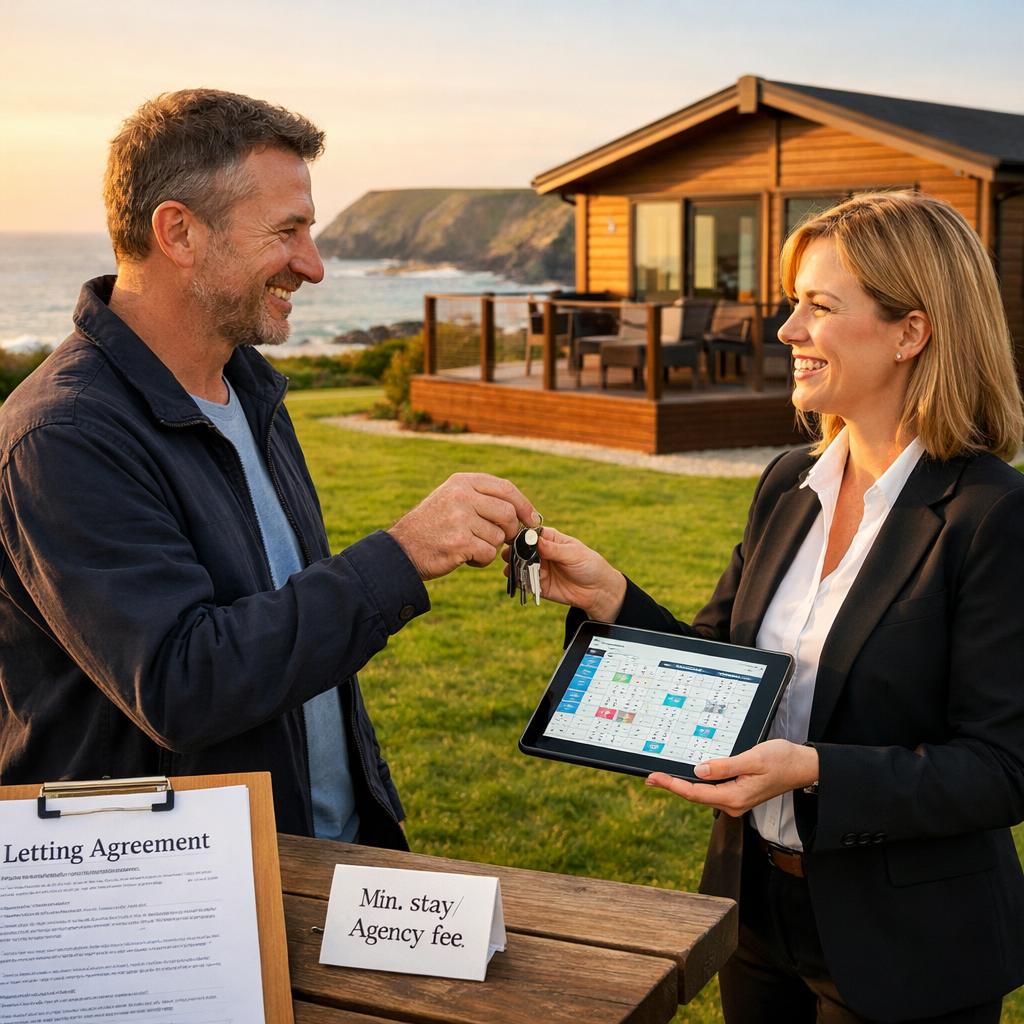
Direct answer: Many Cornwall parks allow letting, but rules vary. Typical conditions include a minimum booking length, agency fees, and limits on private subletting.
How letting works on Cornwall parks. Parks offer three common models: park-managed letting, owner self-let, and hybrid arrangements. Park-managed letting provides marketing, bookings, and cleaning. That convenience usually carries a management fee of 20% to 35% of gross income.
Statistics and practical figures:
– Average occupancy rate for Cornwall holiday lodges used as lets is 42% across the year.
– Peak-season occupancy (June–August) averages 78% on popular parks.
– Typical nightly rates for a two-bed lodge range from £120 in low season to £350 in peak weeks.
– Owners who join a park’s rental pool report a 15% to 35% uplift in bookings compared to self-managed listings.
Letting rules to check before you buy:
– Minimum contract length for owners: some parks require a minimum tenure of 5 to 10 years for letting eligibility.
– Cleaning and linen policies: many parks mandate professional turnover cleaning to maintain standards.
– Dog-friendly letting: roughly 55% of parks allow dogs in lodges, but some limit breeds and numbers.
– Insurance and liability: letting must be declared to insurers. Some policies rise by 10% to 35% for commercial letting.
Example consequence: If your lodge achieves gross bookings of £18,000 and the park takes 25%, your pre-cost income is £13,500. After pitch fees and utilities, net may be low. Therefore, treat letting income conservatively when calculating return on investment.
For wider letting strategy and investment guidance, see our analysis at Is Buying a Holiday Lodge a Good Investment? and browse advertised parks at Holiday Lodge and Log Cabin Parks in Cornwall.
Letting vs self-use: which is better?
Direct answer: Letting suits investors who accept lower personal use. Self-use suits lifestyle buyers prioritising flexible stays.
If you want to maximise income, expect higher wear-and-tear and management overheads. If you prioritise family time and pets, self-use or restricted letting options may be better.
Checklist before you reserve a lodge — holiday lodges for sale cornwall
Direct answer: Before you reserve holiday lodges for sale cornwall, verify planning status, pitch fees, season length, pet policy, and resale history. Do this in writing.
Essential checks and paperwork:
– Ask for the park licence and confirm whether the pitch has holiday or residential planning permission. This defines your legal right to occupy.
– Request a five-year record of pitch fee increases. Aim for parks that cap rises or link them to CPI.
– Check the park’s permitted season. Is it 10 months, 11 months, or year-round? Season length affects utility costs and letting potential.
– Confirm pet rules. Around 55% of Cornish parks allow dogs, but restrictions apply. Get the policy in writing.
– Review the park’s letting agreement. Confirm management fees, marketing commitments, and owner blackout dates.
– Demand a full list of included items: decking, steps, integrated appliances, and warranties. New-build warranties typically last 5 to 10 years.
– Ask for recent sales comparables on the park. Request three sales in the last 18 months to understand resale value.
Actionable negotiation tips:
– Negotiate a fixed pitch fee period for the first 2 to 5 years if possible.
– Seek a staged payment plan that ties payments to completion milestones.
– Insist on a snagging schedule and final condition report before final transfer.
For a complete step-by-step buying checklist and legal checks, read our comprehensive guide at How to buy a holiday lodge in the UK. If you prefer parks outside Cornwall, see our lodges in Cambridgeshire for a rural comparison at lodge for sale Cambridgeshire.
Sample reservation timeline
Direct answer: Expect 6–12 weeks from reservation to handover for a pre-owned lodge, and 12–20 weeks for new builds.
This timeline covers deposit, survey or inspection, paperwork signing, and final handover. Factor in longer waits for bespoke interiors or popular delivery windows such as spring and early summer.
Key Takeaways
- Holiday lodges for sale cornwall are primarily holiday-use properties with defined seasons and park licences; verify planning before you buy.
- Typical purchase prices range widely: pre-owned two-bed lodges start near £95,000, while luxury three-bed sea-view units can exceed £300,000.
- Annual running costs commonly total £4,500–£12,000; budget for pitch fees, utilities, insurance, and maintenance.
- Letting can boost bookings but agency fees and wear reduce net income; treat rental projections conservatively.
- Before you reserve, confirm season length, pet policy, pitch fee history, and recent comparable sales in writing.
Frequently Asked Questions
What is the downside of owning a holiday lodge?
Direct answer: The main downsides are ongoing pitch fees, limited security of tenure on holiday licences, and variable letting income. These reduce net returns and add ongoing obligations.
Elaboration: Owners commonly underestimate annual running costs. Typical annual fees range from £4,500 to £12,000. There is also wear-and-tear when letting, and some parks impose noise and occupancy rules. If resale matters, market demand for holiday lodges is seasonal and local. Finally, holiday lodges generally cannot be used as a primary residence without specific park planning status.
Is it worth buying a holiday let in Cornwall?
Direct answer: Buying a holiday let in Cornwall can be worth it for lifestyle value and steady peak-season demand, but net financial returns are often modest after costs.
Elaboration: Cornwall attracts strong tourist demand. Industry data shows peak-season occupancies often exceed 75% in top locations. However, after pitch fees, agency commissions, taxes, and running costs, net yields are commonly 2% to 5% of purchase price. Many buyers accept this because of personal use benefits and capital appreciation potential in sought-after coastal spots.
Is buying a holiday lodge a good investment in the UK?
Direct answer: Buying a holiday lodge in the UK is a mixed investment. It can provide capital appreciation and rental income, but returns are lower than many traditional property investments.
Elaboration: Research indicates average annual capital growth for coastal holiday lodges ranges from 3% to 7%, depending on location. When combined with modest rental yields and high running costs, total return often trails conventional buy-to-let. Buyers should view lodges primarily as lifestyle assets with secondary income potential.
Can I permanently live in a lodge?
Direct answer: You usually cannot permanently live in a holiday lodge unless the park has specific residential planning permission or a residential licence.
Elaboration: Most holiday parks in Cornwall operate under holiday-use licences. Permanent occupation affects council services and lending. For a full explanation of residency rules and alternatives, consult our guide at Can You Live in a Lodge All Year Round in the UK and review the park’s planning documentation before purchase.
Enquire now