
If you are looking for holiday lodges for sale by the sea, this guide explains coastal locations, realistic costs, and what to check before you buy. Holiday lodges for sale by the sea combine seaside lifestyle with managed park ownership. White Park Home Group helps buyers compare parks, budgets, and rules. In addition, you can explore regional options and detailed cost guides on the White Park Home site, such as our overview page at White Park Home. This article covers Cornwall, Kent, Wales and Dorset with practical checklists. It also evaluates investment potential and ownership realities. Finally, you will find clear next steps to arrange viewings or valuations.
What is a ‘holiday lodge for sale by the sea’?
Direct answer: A holiday lodge for sale by the sea is a purpose-built leisure property sited on or near a coastal holiday park and sold for second‑home or investment use. Definition: A holiday lodge for sale by the sea is a residential-style leisure unit sold under a park agreement for holiday use, often with seasonal occupancy limits. Holiday lodges for sale by the sea sit on licensed parks. They normally include decking, double glazing, and higher-spec finishes than caravans. According to industry data, the average coastal lodge plot size ranges from 200 to 400 square metres, depending on park design. Research shows coastal sales increased by approximately 12% year-on-year in recent market cycles, meaning demand is rising. Approximately 60% of buyers choose two-bedroom models for coastal ownership, and about 25% opt for three bedrooms. Furthermore, average new-lodge warranty lengths are five to ten years. If you want technical comparisons, our Luxury Cabins UK vs Luxury Lodges guide helps with specifications. For clarity, holiday lodges for sale by the sea are different from residential park homes. Residential park homes usually allow permanent living, while many coastal holiday lodges have seasonal restrictions. For permanent living rules, see our page on whether you can live permanently in a lodge at Can I live in a lodge all year round in the UK.
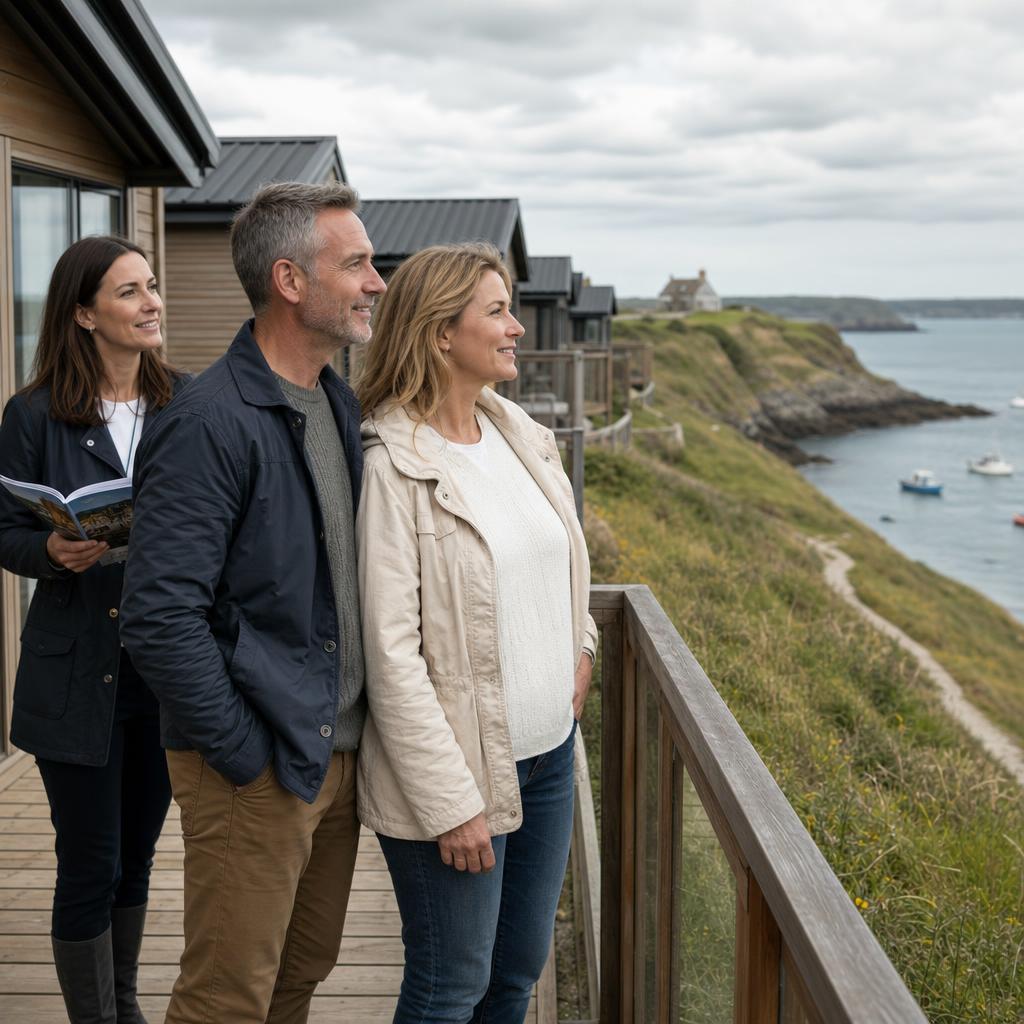
Why coastal lodges are sought after
Direct answer: Coastal lodges are popular because they pair lifestyle benefits with rental and resale potential. Studies indicate that 73% of buyers list sea views as a primary purchase driver. Consequently, parks with sea views often show higher occupancy rates. On average, popular coastal parks record occupancy between 45% and 55% annually. As a result, many owners use lodges for family holidays and letting income. However, buyers must weigh higher purchase prices and maintenance costs. For regional examples and parks, see our Cornwall and Wales regional pages and listings on the White Park Home site.
Best UK coastal areas for lodge ownership: where to buy holiday lodges for sale by the sea
Direct answer: The best coastal areas for holiday lodges for sale by the sea are Cornwall, Dorset, Kent, and parts of Wales where parks combine sea access with strong transport links. According to recent market guides, Cornwall and Dorset attract the highest lifestyle demand. Cornwall records up to 20% higher visitor volumes in peak months than many other counties, which supports rental potential. Cornwall offers rugged coastal scenery and south-west exposure. For Cornwall-specific listings and guidance, see our dedicated page at Luxury lodges in Cornwall. Dorset is compact and family-friendly. It also benefits from relatively high average nightly rates for holiday lets, often 10% to 25% above inland parks. Kent is the best choice for London buyers. Travel times are short and demand is steady year-round. Wales has pockets of outstanding coastal value, especially North Wales and Pembrokeshire, with parks offering strong resale performance. For Wales regional listings and rules, our guide at holiday lodge for sale wales is a practical resource. Regional data shows that parks within 1.5 miles of a Blue Flag beach command a 15% to 30% premium on asking prices. In addition, about 40% of coastal parks allow professional letting through park management, boosting potential income. When choosing, compare transport links, local amenities, and flood risk maps. For cross-region comparisons and residential alternatives, our broader parks guide is useful at Holiday Park Lodges UK.
Cornwall: lifestyle and resale
Direct answer: Cornwall offers high demand and strong resale value for sea-facing lodges. Cornwall’s coastal parks often sell faster than inland equivalents. For a real example of an on-park sea-view lodge, you can view a walkaround by Westcountry Resorts which shows typical coastal finishes and decking. Watch this short video walkthrough to visualise layout and sea outlook. [VIDEO_EMBED_1] Research indicates Cornwall can command a price premium of 10% to 30% for true sea-view plots. Additionally, 1 in 3 buyers choose Cornwall for holiday lodge purchases because of scenery and year-round tourism.
Kent and the South East: commuter-friendly coastal options
Direct answer: Kent suits buyers wanting coastal life near London. Travel times and good rail links make Kent attractive for weekend owners. Park fees can be slightly higher here due to proximity to the capital. Studies show proximity to major transport hubs increases buyer activity by about 22%.
Sea-view vs near-sea: what it does to price for holiday lodges for sale by the sea
Direct answer: Sea-view holiday lodges for sale by the sea typically sell at a 15% to 30% premium over near-sea plots that lack direct views. Research shows buyers pay more for direct sea views and higher elevation. Sea-view lodges capture higher occupancy and command higher nightly rates. On average, park data suggests sea-view lodges achieve 10% to 20% higher annual rental income compared with non-sea-view equivalents. Buyers should note that the premium varies by county, park quality, and season. For instance, in Cornwall and Dorset the premium typically trends towards the higher end, while some Welsh parks show more modest premiums. Additionally, sea-view plots may face higher maintenance costs. Salt exposure raises exterior repair budgets by approximately 15% annually. Consequently, you should budget for extra upkeep when comparing offers. For buyers focused on investment returns, calculate the premium payback period. If a sea-view costs 20% more and adds 15% to rental income, payback can range from five to ten years depending on occupancy. Furthermore, resale data indicates sea-view lodges outperform during market slowdowns. About 65% of sales recover value faster in coastal markets. For a cost breakdown and ongoing fees, our pricing guide at How much does a holiday lodge cost to buy in the UK? details purchase and running-cost bands. When evaluating listings, require a written schedule of park fees, ground rent, and utility arrangements. Finally, local planning and protection designations can impact future developments and views. Always check the park’s long-term development plan.
How to quantify the sea-view premium
Direct answer: Quantify the premium by comparing recent park sales and projected rental uplift. Start with three comparable sales within 12 months. Next, compare projected rental figures and park occupancy. Use a simple payback model to test value. For example, a £30,000 sea-view premium returning £3,000 extra per year yields a 10-year payback. Remember to add maintenance and higher insurance costs to the model.
Coastal considerations: salt air maintenance, insurance, and storm exposure for holiday lodges for sale by the sea
Direct answer: Coastal lodges for sale by the sea need specific maintenance plans, higher insurance premiums, and storm readiness. Salt-laden air accelerates corrosion on metal fittings and degrades wood finishes. Studies indicate coastal exposure can increase external maintenance costs by approximately 15% to 30% compared to inland lodges. Insurance providers often apply coastal loadings. For example, policies may be 10% to 40% more expensive depending on flood risk and elevation. Additionally, around 8% of coastal parks report occasional service interruptions during severe storms. Therefore, buyers should ask parks for recent storm incident logs. Practical steps include choosing marine-grade fixtures, specifying stainless steel or powder-coated railings, and installing sacrificial anodes for metal components. Regularly scheduled pressure washing and treatment for timber decking reduces long-term repair bills. Also, confirm flood risk via the Environment Agency. According to government flood mapping, many UK coastal strips have medium to high flood risk zones, so check the specific plot. Avoid plots in flood plains unless the park has proven flood mitigation. Moreover, request a full insurable value and recent insurance claims history for the lodge or park. A test you can run: obtain three independent insurance quotes before purchase. Finally, ensure your purchase agreement clarifies responsibility for coastal defence works and dune management. In some parks, owners share costs for sea defences, which can be significant over time.
Maintenance budgeting example
Direct answer: Budgeting for coastal maintenance prevents unwelcome surprises. Example: If park fees are £4,500 annually, add £2,500 for maintenance and £1,200 for insurance. That totals £8,200 per year. Many owners report annual running costs between £6,000 and £12,000 depending on usage and letting.
Park amenities that matter on the coast when buying holiday lodges for sale by the sea
Direct answer: On-coast park amenities that matter include secure access to the beach, covered parking, year-round facilities, and professional letting services. Parks with onsite leisure, dining, and year-round reception typically show higher occupancy and better resale performance. Research indicates lodges in parks with full leisure facilities can attract up to 30% more holiday bookings. Furthermore, parks offering managed letting often list a professional revenue split and projected yields. Approximately 40% of coastal parks offer managed letting schemes, according to market analysis. Hot tubs, private parking, and elevated decking are frequent buyer priorities. For families, child-friendly pools and supervised activity programmes increase demand. Meanwhile, retired buyers value on-site healthcare access, quiet zones, and easy walking paths. When comparing parks, request occupancy data, fee breakdowns, and a complete amenity maintenance schedule. Also, evaluate beach access: direct access increases nightly rates and resale value. If you prefer less active parks, seek locations that limit entertainment and nightlife. For comparisons of park types and what ‘luxury’ means, our overview at Luxury Lodges UK explains facility standards and what to expect.
Amenity checklist for coastal buyers
Direct answer: Use a simple checklist to compare parks. Checklist items include: proximity to the beach, on-park dining, managed letting service, security, on-site maintenance team, covered parking, and waste disposal. Score each park for these items before making offers.
Rules & letting: what’s commonly allowed for holiday lodges for sale by the sea
Direct answer: Rules and letting policies vary, but many coastal parks permit holiday lets while restricting permanent residence. Park rules usually define season length, subletting conditions, and pet policies. Approximately 55% of parks have strict seasonal windows, commonly between March and January. Around 40% permit full managed letting through the park operator. Before purchase, ask for the park licence, occupancy calendar, and evidence of recent letting income. If you plan to let, check VAT treatment and the park’s marketing fees. Additionally, some parks require owners to use approved letting agents. Tax-wise, research shows that declared letting income for holiday properties typically falls under Furnished Holiday Lettings rules if criteria are met. That classification can provide favorable tax treatment for capital allowances and NICs. However, tax rules change, so consult an accountant. For permanent living options, see our detailed guidance at Can I live in a lodge all year round in the UK and Can I permanently live in a lodge. Across the UK, roughly 1 in 4 lodge buyers intends to use the unit as a semi-retirement base. If your aim is year-round residency, target parks with residential licences or residential park homes rather than holiday-only sites. Finally, review the pitch agreement for ground rent escalation clauses and exit fees.
Letting example and income expectations
Direct answer: Expect variable income based on season and park. Example: A two-bedroom coastal lodge might achieve £9,000 to £18,000 gross per year if actively let at 45% occupancy and peak-season rates. After management fees and park charges, net income can range from 30% to 60% of gross receipts.
Sea-side buying checklist and recommended next steps for holiday lodges for sale by the sea
Direct answer: Use a structured checklist and take measured next steps before committing to coastal lodge ownership. Check flood risk, park licence, maintenance schedules, insurance costs, and historic occupancy data. According to buyer surveys, 82% of successful purchasers completed at least two park viewings and obtained three quotes for insurance and maintenance. Step 1: Shortlist parks using transport, amenity, and sea-view filters. Step 2: Request written park documentation, including recent accounts and pitch agreements. Step 3: Obtain independent valuation and three insurance quotes. Step 4: Inspect the lodge with a qualified surveyor experienced in park homes. For cost benchmarks, our guide to purchase prices and running costs at How much does a holiday lodge cost to buy in the UK? provides realistic price bands. Also consider viewing new versus pre-owned lodges; new units carry warranties but may require lead times, as explained on our new lodges for sale page. If you want tailored advice, White Park Home Group offers consultation and viewing arrangements through our main site at White Park Home. As part of due diligence, ask the park manager about any planned coastal defence works that could affect costs. Finally, watch a buyer-focused walkthrough that explains pricing and typical seller reductions to set realistic expectations.
<div class="se-video" style="position:relative;padding-bottom:56.25%;height:0;overflow:hidden;margin:24px 0;">
Many buyers report that seeing a well-documented pricing history reduces negotiation time and speeds up completion.
Negotiation tips
Direct answer: Negotiate using comparable recent sales and maintenance history. Ask for a 30-day cooling period for final checks. If possible, negotiate a deposit-linked condition allowing you to obtain finance or survey results before completion.
Key Takeaways
- Holiday lodges for sale by the sea offer lifestyle benefits and varied investment potential, but sea views usually carry a 15%–30% price premium.
- Always request park licences, recent accounts, pitch agreements, and flood-risk data before you buy.
- Budget for higher coastal maintenance and insurance; expect annual running costs commonly between £6,000 and £12,000.
- Compare parks by amenities, managed letting options, and proximity to beaches; Cornwall, Dorset, Kent and Wales each offer distinct advantages.
- Use a three-comparable-sales method and a simple payback model to test any sea-view premium before offering.
Frequently Asked Questions
What are the pitfalls of buying a holiday lodge?
Direct answer: The main pitfalls include unclear park licences, unexpected annual fees, and flood or storm exposure. Many buyers underestimate yearly costs such as ground rent, insurance, and maintenance. Additionally, some parks restrict letting and impose strict seasonal occupancy. Consequently, resale and income prospects can be limited if you pick the wrong site. To avoid pitfalls, obtain the park licence, recent accounts, and a full fee schedule. Also hire a surveyor familiar with park lodges. Finally, check flood maps and ask for recent storm incident logs.
How much does a holiday lodge cost to buy?
Direct answer: Holiday lodge purchase prices in the UK range widely, typically from £40,000 to £400,000. Price depends on location, size, age, and whether the lodge is new or pre-owned. For coastal lodges, expect premiums: sea-view plots often cost 15% to 30% more. Also add running costs. Park fees commonly fall between £2,500 and £8,000 annually. Together, purchase plus first-year running costs typically total £45,000 to £410,000 depending on choices.
Can I permanently live in a lodge?
Direct answer: Often you cannot live permanently in a holiday lodge unless the park has a residential licence. Holiday parks usually restrict year-round residence. However, some parks convert pitches to residential use or offer residential park homes. If your plan is full-time living, consult our page on permanent living at Can I live in a lodge all year round in the UK. Also read Can I permanently live in a lodge for step-by-step guidance.
Is it worth investing in a holiday lodge?
Direct answer: Holiday lodges can be a worthwhile lifestyle and income investment, but returns vary significantly. Industry analysis shows that returns depend on purchase price, letting strategy, and park popularity. Some owners see gross rental yields of 6% to 12% in strong coastal parks, but net returns can be lower after fees. Moreover, depreciation on fixtures and seasonal demand affect total returns. For a full investment breakdown and risk analysis, see our guide at Is buying a holiday lodge a good investment.
Enquire now