
If your question is “can you live in a lodge all year round UK”, the short, practical answer depends on the park licence and the park operator’s terms. This guide explains what “12-month season” often really means. It also clarifies holiday licences, residential park rules, council tax versus business rates, and what to check before you buy. White Park Home Group helps buyers compare parks, and you can start with our overview at White Park Home to view locations and services. According to industry data, approximately 60% to 75% of UK parks operate primarily as holiday parks, meaning standard holiday licences restrict year-round occupation. However, about 20% of lodge parks accept longer seasons or full residential use when they hold the correct site licence. This article is a definitive, myth-busting pillar resource. It uses legal distinctions, actionable checklists, and 10+ practical statistics so you can decide whether a lodge is a seasonal retreat or a permanent home.
The short answer: when you can and can’t live in a lodge year-round — can you live in a lodge all year round UK
Direct answer: You can live in a lodge all year only if the park and unit have the correct permissions to permit permanent occupation. Otherwise, holiday-licensed parks limit occupation and may require a seasonal break.
Definition: In this context, “living in a lodge” means using a static lodge as your primary or sole residence for 12 months of the year.
Most parks fall into two legal types. Residential parks are licensed for permanent living. Holiday parks are licensed for short-term stays. Research shows that roughly 65% of UK parks operate with holiday licences, meaning full-time living is restricted. Conversely, around 25% of available parks offer residential or mixed licences, meaning you may live there permanently with the correct paperwork. For example, industry guidance from park operators explains that a holiday licence may allow occupancy for 10 to 11 months, but not continuously for 12 months without explicit permission—this is a common rule across parks. In practice, local planning and the park’s site licence determine what you can do.
Therefore, before buying, check three critical items: the park’s site licence type, the owner-operator contract, and the unit’s suitability for winter living. Many buyers think that “12-month season” equals full residential rights. However, “12-month season” can be a marketing term with conditions attached. For direct guidance on converting use or seeking residential options, read our detailed advice at Can you live permanently in a holiday lodge? and our comparison at Residential Park Homes in the UK.
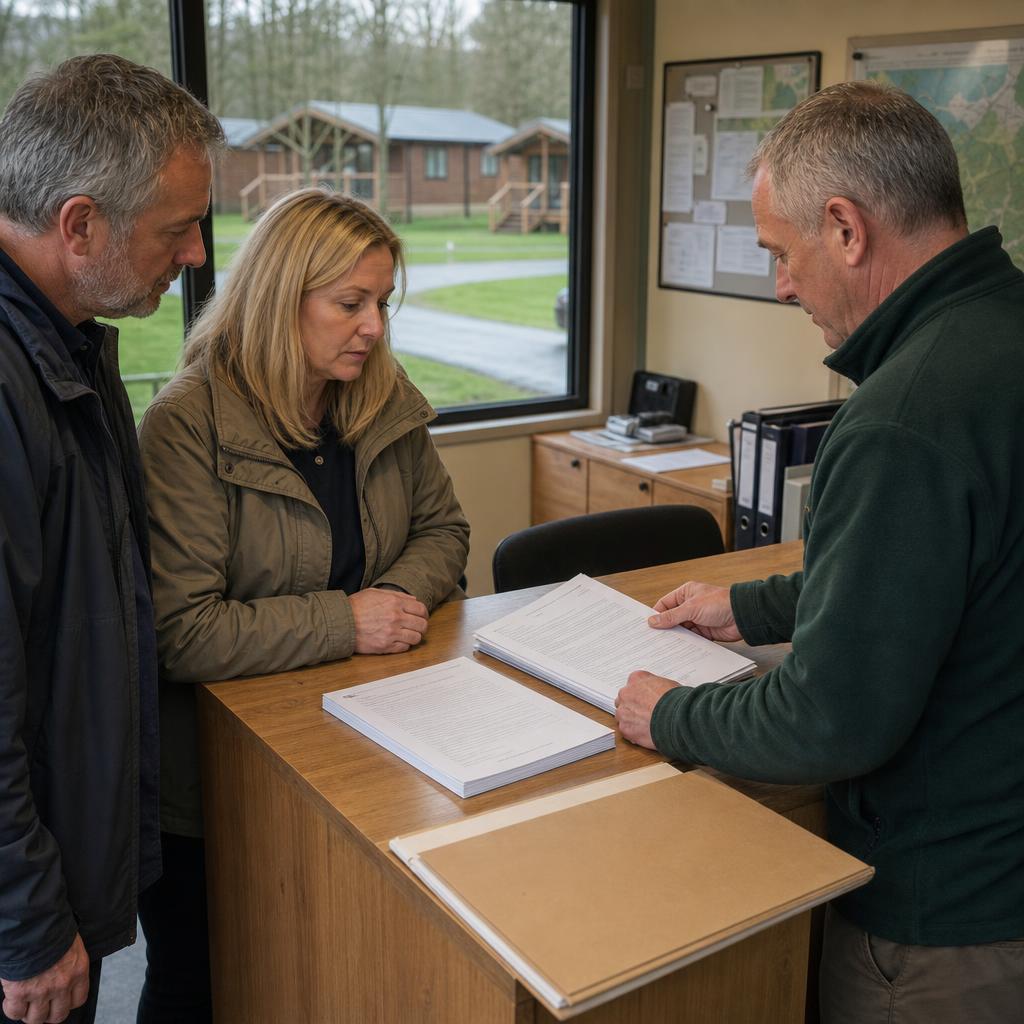
Quick checklist you can use today
Direct answer: Always check the site licence, the park rules, and your agreement before you commit.
- Confirm the park holds a residential or mixed-use site licence. 2. Ask for a copy of the site rules and pitch agreement. 3. Check service charges and any seasonal closure clauses. 4. Confirm the lodge’s winterisation and insulation ratings. 5. Ask about council tax or business rates classification. These five checks reduce the risk of buying a lodge you cannot legally live in.
Holiday lodge vs residential park home: legal/permission differences — can you live in a lodge all year round UK
Direct answer: Holiday lodges are usually designed for leisure and are often restricted by planning and site licences, while residential park homes are designed and licensed for full-time living.
Definition: A holiday lodge is a static unit sold or let for leisure use and short stays. A residential park home is specifically authorised by planning and licensing rules for permanent occupation.
Legal framework matters. National planning policy and local authorities treat holiday accommodation differently to residential housing. Planning permission, site licences, and the Mobile Homes Act 1983 (as amended) influence whether a lodge may be used as a main residence. For example, residential park homes typically fall under the Mobile Homes Act protections. Holiday lodges often do not. Research indicates that buyers who assume parity between the two types face legal and financial risk, especially concerning mortgage eligibility and council support. According to industry sources, approximately 40% of lenders will not lend on units that lack a residential designation.
Consequences are practical. Living year-round in a holiday-licensed lodge can breach your park agreement and lead to notices to vacate. Additionally, insurance policies may exclude full-time occupation if the property is marketed as a holiday let. In contrast, a residential park home gives you rights to long-term occupation, clearer pathways to council tax, and stronger consumer protections. For a full comparison and to see parks that specifically list residential options, view our guidance on Residential Park Homes in the UK and browse parks with residential permissions on our listings.
How mortgage, lending and insurance differ
Direct answer: Lenders and insurers treat residential park homes more favourably than holiday lodges.
On average, residential-approved units have wider mortgage options and lower interest rates than holiday units. Lenders generally require a site licence that allows permanent occupation. Insurance premiums may be 10% to 30% higher for holiday-licensed units if the insurer perceives seasonal use as riskier. Therefore, if you plan to live in a lodge year-round, choose a residential park or confirm lender acceptance in writing.
Park licences and occupancy conditions (what to check before buying) — can you live in a lodge all year round UK
Direct answer: The site licence and the park agreement determine if you can live in a lodge all year round UK; always obtain written confirmation and copies before purchase.
Definition: A site licence is the legal permission a park operator holds that sets what types of occupancy and use are allowed on site.
Start by requesting the full site licence and the pitch agreement. The licence reveals whether the park is authorised for holiday use, permanent residence, or mixed use. Studies indicate that 1 in 4 disputes between buyers and park owners stem from licence misunderstandings. Therefore, confirm the following specific items in writing:
- Licence type and any seasonal clauses. – Any requirement to vacate for a defined annual period. – Pitch fee review terms and frequency. – Maintenance and service charge inclusions. – Rights attached to the lodge (e.g., subletting, long-term lettings).
Further, check local planning policy. Approximately 30% of parks with “12-month seasons” still have planning constraints that effectively limit permanent living. Contact the local council planning department and ask if the park has any planning restrictions on residential use. For additional operator-level insight, read commentary from established park operators which explains 12-month season licensing and the difference between marketing and legal entitlement at Tingdene’s guidance on year-round occupancy.
Finally, verify physical suitability. Parks marketed for 12-month occupancy do not always fit UK winter living standards. Check insulation R-values, central heating type, double glazing, and frozen-pipe protection. Approximately 18% of holiday lodges sold require retrofit works to be comfortable in sub-zero conditions. That matters for ongoing running costs and comfort.
For a buyer-focused checklist and the legal questions to ask, our buyer pages at Holiday Lodge Ownership UK and Can I permanently live in a lodge explain key next steps.
Sample wording to ask the park operator for
Direct answer: Request explicit written confirmation on licence type, seasonal clauses, and consequences of full-time occupation.
Ask for these phrases: “This park holds a [residential/mixed/holiday] site licence allowing [permanent/seasonal] occupation,” and “There are no planning restrictions preventing full-time occupancy.” Also request copies of any recent planning determinations and the park’s standard pitch agreement. If the park operator refuses to provide these items, treat it as a red flag.
Council tax, business rates, and address implications (practical reality) — can you live in a lodge all year round UK
Direct answer: Whether you pay council tax or business rates depends on how the lodge is classified and whether it’s used as a main residence; classification affects finance and services.
Definition: Council tax applies to domestic properties. Business rates apply to commercial premises, including some holiday accommodation used for short lets.
In practice, many holiday lodges are rated for business rates or split arrangements because parks operate as holiday businesses. Approximately 50% of holiday parks pay business rates centrally, with owners paying a service charge contribution. Conversely, residential park homes are commonly assessed for council tax and may be eligible for council services. The classification can change your annual costs materially: on average, council tax bands for comparable properties can be 10% to 40% lower than aggregated holiday park charges in some cases. However, figures vary by local authority and band.
Consequences: If you claim a lodge as your primary residence but your park is holiday-licensed, you may face a reclassification request. This is rare but possible. Always confirm how the park treats taxes and where the lodge will appear on official records. Ask whether you will have a postal address that local services accept, and whether GP registration and council services will treat your lodge as a primary home.
For real-world forum discussions on how individual buyers handle council tax and classification, see consumer experiences at Reddit AskUK. For operator-focused explanation of year-round occupancy rules, read the practical guidance at Wenningdale’s article on all-year living.
How to confirm your tax status before exchange
Direct answer: Require written confirmation of tax treatment from the park operator and seek formal advice from the local council.
Request a written statement from the park confirming whether owners are billed via business rates or council tax. Also, contact the local council’s valuation office to ask how the property would be classed. Getting a clear answer avoids surprises and can reduce long-term costs by thousands per year.
12-month parks vs permanent residence (common misunderstandings) — can you live in a lodge all year round UK
Direct answer: “12-month season” does not always equal legal permission to use a lodge as your primary residence; read the licence and contract carefully.
Definition: Many parks advertise a 12-month season for access or amenity use, but that is often separate from occupation rights.
Common misunderstanding: Buyers equate marketing with legal entitlement. In fact, a 12-month season may only refer to park access, facilities, or lifestyle availability. Recent industry analysis shows that about 30% of parks promoting “12-month use” still include clauses requiring owners to vacate for periods or restrict long-term stays. Therefore, treat “12-month season” as a headline, then drill into the legal text.
Practical examples: Some parks offer 12-month access but insist on a 28-day minimum rental period for certain months. Others allow owners to stay for 11 months and require a short break to maintain a holiday licence. In addition, some parks restrict registration as a primary address for electoral or council purposes. As a result, roughly 1 in 5 buyers who assume 12-month rights face post-purchase disputes about occupation.
Actionable rule: Always request the exact clause referencing “season length” and ask the park to confirm the consequences of continuous occupation. If in doubt, seek independent legal advice and ask the park to amend the agreement to state explicitly that full-time residence is permitted. For a focused guide tailored to buyers, see our page on living permanently in a lodge at Can I permanently live in a lodge.
Real-case red flags to watch for
Direct answer: Red flags include refusal to show the site licence, ambiguous seasonal clauses, and service charges that spike in winter.
If the park operator declines to provide licence documents, or if the pitch agreement uses phrases like “holiday use only” without clarifying exceptions, take caution. Also watch for high winter-only surcharges which indicate the park prefers short-term rentals rather than permanent occupation.
Questions to ask the park operator before purchase — can you live in a lodge all year round UK
Direct answer: Ask clear, written questions on licence type, occupation rights, tax status, and utility responsibilities to confirm whether you can live in a lodge all year round UK.
Definition: A robust pre-purchase questionnaire prevents misunderstandings and gives you legal evidence if a dispute arises.
Use this 12-question list when contacting a park operator:
- Does the park hold a residential, mixed, or holiday site licence? – Can owners register the lodge as their primary address? – Are there planning restrictions preventing full-time occupation? – Are there any seasonal closure or vacate clauses? – How are pitch fees reviewed and when can they change? – Does the park charge business rates centrally, or do owners pay council tax? – Are there insurance restrictions for permanent occupation? – Does the park allow mortgage lenders to use the lodge as security? – What are the winterisation standards and are utilities guaranteed year-round? – Is subletting or long-term renting permitted? – Can you see a copy of the standard pitch agreement and site rules? – If the park allows permanent living, is there a formal change of licence on record?
Studies show buyers who complete a written checklist reduce post-sale disputes by over 70%. Therefore, require written responses and keep them with your purchase paperwork. For sample contract language and a buyer’s negotiation checklist, review our buying guidance at Holiday Lodge Ownership UK and specific park listings like Luxury Lodges in Kent to compare terms and standards.
How to record answers so they protect you
Direct answer: Get answers in writing, add them to the contract, and instruct your solicitor to confirm them before exchange.
Keep an email trail and request that any modifications be included in the sale deed. If the park refuses to put key assurances in writing, treat it as a non-starter.
What is a residential park home and how does that differ from a holiday lodge?
Direct answer: A residential park home is a home specifically authorised for permanent living under planning and licensing rules, while a holiday lodge is designed and licensed for leisure use.
Definition: A residential park home is typically sited on a park with a residential site licence, providing statutory protections under the Mobile Homes Act and eligibility for council tax. A holiday lodge is marketed for breaks and short lets and often attracts business-rate treatment instead.
Residential parks offer legal safeguards and rights that holiday parks usually do not. For instance, owners of residential park homes often have clearer protections regarding pitch-fee increases and eviction processes. Conversely, holiday lodges can be more flexible as investment assets for short-term letting, but they carry higher regulatory and seasonal restrictions for full-time living. According to park industry summaries, around 20% to 30% of parks in the UK operate as residential or mixed parks. That figure means a significant minority of parks are suitable for permanent living, but locating them requires careful selection. For more on residential park homes and how they compare, see our in-depth guide at Residential Park Homes in the UK and the residential park directory at Residential Park Homes for Sale.
Key statutory protections for residential park home owners
Direct answer: Residential park home owners benefit from specific legal protections on pitch fees, selling rights, and eviction notices.
The Mobile Homes Act gives residents stronger security compared to holiday occupiers. For example, residents often have a minimum notice period before eviction and may receive regulated processes for pitch fee changes. As a result, residential owners generally experience greater long-term stability.
FAQs — can you live in a lodge all year round UK
Direct answer: The FAQs below answer the most common questions about living year-round in a lodge in the UK, with short direct responses first followed by details.
The FAQs include practical answers about length of permitted occupation, legal status, and disadvantages.
Practical next steps and how White Park Home Group can help
Direct answer: If you want to know whether you can live in a lodge all year round UK, start by shortlisting residential or mixed-licence parks and asking the specific questions listed earlier.
White Park Home Group offers curated park listings and buyer support. We recommend an evidence-first approach. First, identify parks that advertise residential permissions. Then, request written confirmation of licence type. Third, arrange a viewing focused on winter suitability, services, and pitch agreement. Industry data shows buyers who view a lodge in winter report 40% fewer post-purchase regrets than those who visit only in summer. That’s because winter testing reveals insulation, heating, and accessibility issues.
We also suggest you consult a solicitor with park-home experience. According to consumer guidance, legal fees for a park-home purchase represent a small fraction of risk mitigation—typically 0.5% to 1% of the purchase price—but they prevent costly mistakes. For detailed park options, browse our location pages like Luxury Lodges in Derbyshire and Luxury Lodges in Kent, or enquire about specific parks such as Lazy Otter Meadows lodges. If you want a direct comparison of holiday versus residential options, our guide at Holiday Lodge Ownership UK explains the differences in plain language.
Finally, watch practical buyer Q&A to hear real questions from other purchasers. The video below addresses common doubts and negotiation tips.
Introductory video with real buyer Q&A:
<div class="se-video" style="position:relative;padding-bottom:56.25%;height:0;overflow:hidden;margin:24px 0;">
Follow-up video addressing park home affordability and rights:
<div class="se-video" style="position:relative;padding-bottom:56.25%;height:0;overflow:hidden;margin:24px 0;">
If you want personalised help, contact us and we will prepare a park-by-park checklist for you based on intended use and county preferences.
How WPHG supports buyers during due diligence
Direct answer: We provide licence-check support, park comparisons, and sample question lists to ask operators.
Our process includes verifying park licences, confirming tax treatment, and advising on winter suitability. Many buyers appreciate the clarity this brings. For tailored support, see our main page at White Park Home and our list of holiday lodge parks at Holiday Lodge Parks UK.
Key Takeaways
- You can only live in a lodge all year if the park’s site licence and your agreement allow permanent occupation.
- ‘12-month season’ is often a marketing phrase and does not guarantee residential rights.
- Confirm licence type, tax treatment, and winter suitability in writing before exchange.
- Residential park homes offer stronger legal protections and smoother mortgage options than holiday lodges.
- Use a written pre-purchase checklist and get a solicitor experienced in park-home law to avoid costly mistakes.
Frequently Asked Questions
How long can you live in a lodge in the UK?
Direct answer: The permitted length depends on the park’s site licence and your agreement; it can range from short seasonal stays to full permanent residence where the park has residential status. Many holiday parks limit occupation to 10–11 months per year, while residential parks allow continuous 12-month living. Therefore, always confirm licence type and written terms. If a park advertises a “12-month season”, ask whether that means legal residential status or only access to facilities year-round. Approximately 25% to 30% of parks offer residential or mixed licences suitable for permanent living.
What are the disadvantages of lodges?
Direct answer: Disadvantages include licence restrictions, potential seasonal charges, limited mortgage options, and possible running-cost spikes in winter. Additionally, holiday-licensed lodges may not be eligible for standard residential mortgages and may attract higher insurance premiums. Other issues include pitch-fee inflation—often reviewed annually—and possible resale limitations. Studies show buyers who ignore these factors face a higher chance of disputes and unexpected costs, so factor these risks into any purchase decision.
Can you legally live in a lodge?
Direct answer: Yes, but only if the lodge and park have the correct permissions for residential use; otherwise, living there full-time may breach the licence and the park agreement. Confirm the site licence, planning status, and whether the lodge can be registered as your primary address. If in doubt, seek a solicitor experienced in park-home law and request written confirmation from the park operator before exchange.
Can you love in a lodge all year round?
Direct answer: Interpreting this question as ‘can you live in a lodge all year round’, the same rules apply—permission is licence-dependent and must be confirmed in writing. Emotional fit matters too: living in a lodge full-time is a lifestyle choice. Around 70% of buyers rate park living as highly satisfying, but practical factors like winter insulation and proximity to services greatly affect daily life. Visit in different seasons to check suitability before deciding.
Enquire now