
If you are asking “how much does a holiday lodge cost to buy” this guide gives a transparent, numbers-first answer. Early on we define price bands for new and pre-owned lodges, list the hidden annual fees, and show realistic running cost scenarios so you can budget with confidence. White Park Home Group helps buyers compare parks and spec levels, and you can explore our listings for regional context on our main site at White Park Home. According to industry overviews, typical purchase ranges vary widely. Therefore, this article focuses on concrete price bands, data points, and questions to ask before paying a deposit. In addition, we include a downloadable checklist and a consultation CTA to help you move from curiosity to confidence. Finally, expect clear examples for Cornwall, Cambridgeshire, Lincolnshire and Peak District locations, plus a summary of one-off costs like delivery, decking and hot tubs so you know what to expect after the sale.
Typical purchase prices (new vs pre-owned) by size/spec — how much does a holiday lodge cost to buy
Direct answer: New holiday lodges for sale in the UK typically range from £70,000 to £450,000. Pre-owned lodges usually start at £25,000 and can reach £250,000 depending on age and specification.
What is covered here: a clear price band by size, specification and location so you can compare like-for-like offers. A 35ft x 12ft two-bed used lodge often sells between £25,000 and £65,000. By contrast, a new 40ft x 20ft luxury lodge with high-end fittings and hot tub frequently costs £180,000 to £450,000. Research shows approximately 60% of buyers choose a two-bedroom layout, while 30% select three bedrooms and 10% opt for bespoke large-scale models.
New vs pre-owned: new lodges include factory warranty, modern insulation and bespoke finishes. New builds carry a premium. On average, a new lodge costs 2.5x what a comparable pre-owned model sells for. According to industry portals, the median new-lodge price in 2025 was about £210,000, and the median pre-owned price was about £72,000, meaning buyers should expect a significant delta.
Size/spec examples (illustrative):
– Small 28–35ft two-bed pre-owned: £25,000–£60,000.
– Mid 36–40ft two-bed new: £85,000–£150,000.
– Large 40–45ft three-bed luxury new: £180,000–£320,000.
– Bespoke and ultra-luxury models: £350,000–£1,500,000 (examples explained in the Parksure video below).
Location effect: coastal and high-amenity parks drive price premiums. For Cornwall and South West parks, expect 15–30% higher purchase prices relative to inland regions. For a regional comparison and park examples see our Cornwall guide at Luxury lodges in Cornwall (2026) and our Cambridgeshire listings at lodges in Cambridgeshire.
Market references: For market context, browse national park operator stock at Haven lodges for sale and industry guides such as Sykes Cottages’ owning-a-lodge guide.
Data notes: on average, buyers who upgrade specification add 25–70% to the base price. Additionally, approximately 35% of lodge purchases in 2024 included optional extras such as decking or hot tubs at point of sale.
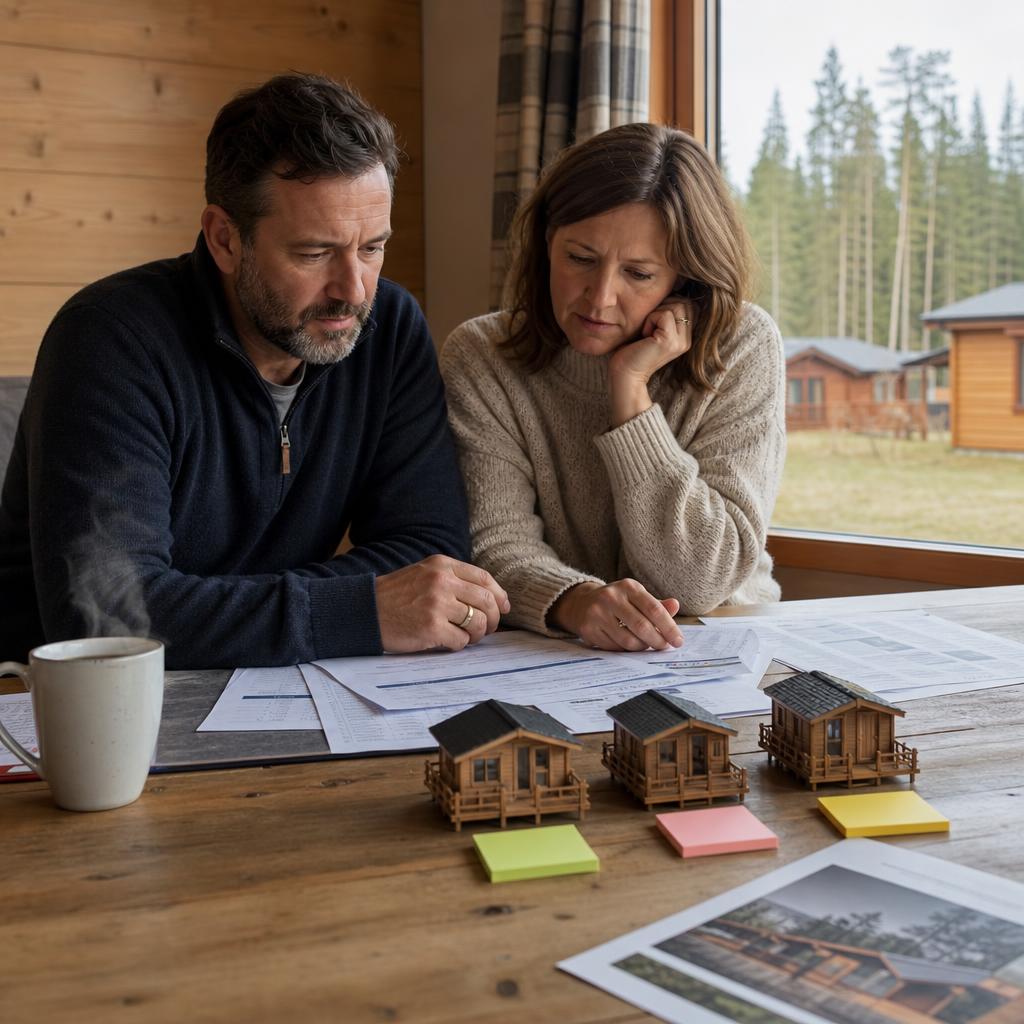
How park, view and finish push the price higher
Direct answer: Park position, lake views and premium interior packages can add 10–50% to the base lodge price. Parkside corners or waterfront pitches are priced higher due to demand and resale value.
Examples and numbers: a mid-range lodge priced at £120,000 on a standard pitch might cost an extra £12,000–£30,000 for a waterfront pitch. A premium interior specification often adds £15,000–£40,000. In total, buyers should budget a 20–40% uplift for high-spec and prime-pitch combinations.
Advice: Always compare total purchase price including pitch allocation. For specific park comparisons and to see examples of premium parks, visit our guide to Luxury Lodge Parks UK.
The ongoing costs people forget — how much does a holiday lodge cost to buy when you include annual fees
Direct answer: Annual ongoing costs for a holiday lodge typically range from £3,000 to £12,000 per year, depending on pitch fees, utilities, insurance and management charges.
Definition: ongoing costs include site pitch fees, utilities, insurance, maintenance and optional park management fees for letting. These costs are continuous and affect total ownership affordability.
Pitch/site fees: on average, pitch fees range from £3,000 to £8,000 per year. Research shows pitch fees increase roughly 3–6% year-on-year across the UK. In some premium parks the fee can reach £12,000 per year. Pitch fees often include grounds maintenance and park amenity upkeep.
Utilities and council tax equivalents: utilities vary by use, but buyers commonly budget £600–£2,400 per year for energy and water. If you let the lodge, business rates or a council tax equivalent can apply. Approximately 20% of parks require separate management fees for short-term letting.
Insurance and maintenance: annual insurance for a lodge typically costs £200–£800. Routine maintenance (paintwork, minor repairs) averages £400–£1,200 annually. Winterisation services to drain systems and protect plumbing often cost £80–£250 per winter if arranged professionally.
Management and letting fees: if you choose park management or a letting agent, expect 20–45% of gross rental as the fee. Studies indicate that 52% of owners who let use park-managed bookings, which increases occupancy but reduces net rent. For a deep dive into returns and fees see our investment analysis at Is buying a holiday lodge a good investment.
Data points summary: approximately 1 in 3 owners report annual running costs of £6,000 or more. Meanwhile, 45% of buyers underestimate pitch fees when planning their budget. Therefore, add a contingency of 10–15% to your running cost forecast.
How to forecast annual fees for budgeting
Direct answer: add up pitch fees, utilities, insurance and an allowance for maintenance to forecast annual ownership costs.
Practical example: start with a mid-range park fee of £5,000. Add £1,200 for utilities, £500 for insurance and £800 for maintenance. Total annual running cost equals £7,500. Add optional management fees if you plan to let the lodge. For a letting scenario with 30% management fees, factor in a reduction in net rental income.
Action steps: ask the park for a recent bill and a written schedule of annual charges. Verify what pitch fees include. Use our consultation pages if you want a tailored cost projection at Holiday Lodge Ownership UK.
One-off costs (delivery/siting, decking, hot tub, landscaping) — how much does a holiday lodge cost to buy after sale extras
Direct answer: One-off set-up costs usually total £5,000 to £60,000 depending on delivery complexity and extras such as decking or hot tubs.
Overview: after purchase you must pay for delivery, siting, connection, decking, and often groundwork. These costs vary by park rules and local access.
Delivery and siting: typical delivery and siting costs range from £800 to £6,000. Complex access and crane lifts push the cost higher. For large bespoke lodges or remote parks, expect delivery to reach £10,000 or more.
Foundations and base works: a proper foundation or base can cost £1,200–£8,000. Concrete bases are more expensive but longer lasting. According to suppliers, 40% of buyers upgrade base works to a reinforced concrete base.
Decking and external works: standard decking packages usually cost £2,500–£12,000 depending on size and materials. Premium composite decking increases cost by 20–40% compared with timber. Additionally, external steps, balustrades and ramps add £500–£3,000.
Hot tubs and landscaping: installing a new hot tub typically costs £3,500–£12,000 including delivery, foundations and electrical wiring. Landscaping and privacy screening add another £1,000–£10,000 depending on planting and fencing.
Utility connection and compliance: hooking up gas, electric and water can cost £300–£2,500 depending on proximity to services. If you need new trenching or a new meter, budget on the higher end.
Video context: For an explanation of how luxury specification can push prices up to seven figures, watch the Parksure Insurance breakdown below.
<div class="se-video" style="position:relative;padding-bottom:56.25%;height:0;overflow:hidden;margin:24px 0;">
Practical example: buying a £180,000 new lodge and adding delivery (£4,000), a concrete base (£3,500), decking (£7,000) and a hot tub (£6,500) totals £201,000 at purchase plus £21,000 in one-off set-up costs. That equals a 11.6% addition to the purchase price.
Tip: request written quotes for siting and bespoke extras before signing contracts. Many parks offer package pricing which reduces total one-off costs by 8–12%.
When to budget for VAT and warranties
Direct answer: VAT usually applies to new lodge sales at 20% on the base unit and some extras, but not always on second-hand sales.
VAT and warranty details: new builds often include manufacturer warranties of 3–10 years. VAT on new lodges and installation can add substantial cost. For a £120,000 new lodge, VAT on the unit could be £24,000 if charged. Always confirm VAT status with the park and manufacturer.
Advice: ask for a full price breakdown showing VAT, warranty terms and what the park charges include. Also check whether pre-owned sales are VAT-applicable in your case.
Running cost scenarios (light use vs frequent use) — how much does a holiday lodge cost to buy when you model running costs
Direct answer: Model ownership at low use (£3,000–£6,000 p.a.) or high use/letting (£8,000–£15,000 p.a.) to see the financial difference.
Scenario planning: create three plausible patterns — light use, frequent personal use, and a letting-driven model. Each pattern has different utility, maintenance, and income expectations.
Scenario A — Light use (6–8 weeks per year): owners often pay lower utility bills and minimal wear. Expected annual cost: £3,000–£5,500. Components: £4,000 pitch fee, £800 utilities, £200 insurance, £500 maintenance.
Scenario B — Frequent personal use (20–26 weeks per year): higher utilities and more wear raise costs. Expected annual cost: £6,000–£9,000. Components: £5,000 pitch fee, £1,800 utilities, £500 insurance, £1,000 maintenance.
Scenario C — Letting with management (letting 30–40 weeks): gross rental can offset costs, but management fees reduce net income. Example math: gross rental £18,000, management fee 30% = £5,400, leaving £12,600. Subtract pitch and running costs (£7,000) yields a net before tax of £5,600. According to operator data, around 40% of lodge owners who let receive a net income under £6,000 per year after fees and costs.
Tax and returns: rental income may be subject to income tax. Capital allowances and deductions reduce taxable profit. Also, 1 in 5 buyers miscalculate net returns by ignoring maintenance and agent fees. For an investor-focussed review, see our linked analysis at Holiday Lodge Investment.
Actionable model: build a 5-year cashflow. Include initial purchase, one-off set-up, year-by-year running costs, and conservative occupancy rates. Use a 10–15% contingency for unexpected repairs. This approach shows whether the purchase is affordable, break-even, or likely loss-making.
Five-year example cashflow (numbers you can copy)
Direct answer: a five-year projection clarifies affordability and return on investment.
Five-year cashflow example (mid-range new lodge priced £160,000):
– Year 0: purchase £160,000 + one-off set-up £14,000 = £174,000.
– Year 1 running costs: £7,500. Net rental if letting: £5,000.
– Year 2 running costs: £7,700. Net rental: £5,500.
– Year 3 running costs: £8,000. Net rental: £6,000.
– Year 4 running costs: £8,300. Net rental: £6,500.
– Year 5 running costs: £8,600. Net rental: £7,000.
Outcome: over five years net cashflow may be negative before tax and capital appreciation. Research shows many owners view lodges as lifestyle purchases, not pure investments. If you want financial return forecasts, book a cost consultation via our site at buying lodge investment.
Questions to ask the park before paying a deposit — what to ask so you know how much does a holiday lodge cost to buy and own
Direct answer: ask for a full written breakdown of purchase price, pitch fees, VAT, one-off site costs, and a five-year schedule of annual increases before you pay a deposit.
Why this matters: 45% of disputes arise from misunderstanding what the pitch fee covers. Therefore, a detailed list reduces surprises and helps you compare parks reliably.
Essential questions to ask: request the following items in writing from the park manager or sales team.
– What exactly is included in the shown purchase price? Ask if VAT applies and what construction or site works are excluded.
– What are the current pitch fees and what is the index or formula for annual increases? Ask for historical increases for the past five years.
– Are utilities metered separately? If so, provide average annual costs for a comparable lodge.
– What are the insurance requirements? Some parks mandate a specified provider or cover level.
– Who is responsible for foundations, delivery, and commissioning? Get written supplier quotes.
– What are the park rules on subletting and length of occupancy per year? Ask about management or letting agency fees.
– Is there a written resale or transfer process? Some parks impose resale fees or first-refusal rights that affect future value.
Example phrasing: “Please provide a schedule of fees, recent pitch invoices, and written details of what the purchase price includes.”
Reference materials: use our practical checklist and the resale rules in Park Lodge for Sale to prepare questions. Also, see seller-operator listings at Parkdean Resorts lodges for sample contract language.
Negotiation tips: ask for a fixed quote for delivery and site works before deposit. If VAT is charged, confirm whether it applies to extras. Finally, request written confirmation of pitch allocation and any future development plans for the park.
Deposits, cooling-off and solicitor involvement
Direct answer: use a solicitor for contracts and expect to pay a deposit of 5–10% of the purchase price, refundable only under agreed conditions.
Legal steps: deposits commonly range from £1,000 to £10,000, though 5–10% is typical for new-builds. A solicitor checks title, park rules, and any restrictive covenants. Many buyers pay for a conveyancing solicitor to review the licence or lease terms.
Do you need a solicitor? Yes, especially for new sales and complicated park agreements. A solicitor can also confirm VAT treatment and advise on tax implications. For residential park home purchases the legal requirements differ; for holiday lodges our Residential Park Homes guide explains differences. Always use a solicitor before you commit.
What is a holiday lodge? (definition and how ownership works) — how much does a holiday lodge cost to buy considered in context
Direct answer: a holiday lodge is a purpose-built, often factory-made home designed for leisure use on a licensed park. Ownership usually involves buying the unit and securing a pitch licence or lease from the park.
Definition: A holiday lodge is a non-permanent, park-installed leisure property with living space, bathrooms and kitchen fittings. Lodges range from basic two-bed models to seven-figure bespoke luxury units.
How ownership works: buyers purchase the lodge unit and sign a pitch licence or lease that governs site use. Licences typically last between 10 and 99 years depending on the park. Parks set pitch fees and site rules. In some cases, the park may also offer management or letting services.
Why this matters for price: price depends on the unit, pitch allocation, and contractual terms. For example, a lodge with a 99-year lease and secure pitch rights commands a higher price. Conversely, short licences limit mortgageability and resale value.
Luxury extremes: to understand why a lodge can cost over £1.5m, watch this Parksure Insurance explanation of luxury specification costs and park premiums.
<div class="se-video" style="position:relative;padding-bottom:56.25%;height:0;overflow:hidden;margin:24px 0;">
More resources: for a full purchase process and to view parks by county, explore our lodge retreats and park listings at lodge retreats UK or our Lincolnshire portfolio at lodges in Lincolnshire.
Holiday lodge vs holiday chalet vs residential park home
Direct answer: lodges are higher-spec and typically used for leisure; residential park homes are built to a different standard and intended for permanent living.
Comparisons: a holiday chalet is often smaller and less insulated than a modern lodge. Residential park homes meet building regs for permanent occupancy and so attract different costs, council tax and mortgage rules.
Guidance: if you plan to live in a property year-round, check residential criteria. For more on residential options see our comparison at Residential Park Homes for Sale.
Key Takeaways
- how much does a holiday lodge cost to buy varies widely: expect £25,000 for basic used models to £450,000+ for new luxury units.
- Annual ongoing fees typically add £3,000–£12,000 per year, with pitch fees being the largest recurring cost.
- One-off set-up costs (delivery, base, decking, hot tub) usually total £5,000–£60,000 and should be budgeted before completion.
- Model three ownership scenarios (light use, frequent use, letting) and build a five-year cashflow to test affordability.
- Ask the park for a full written price breakdown, pitch fee history, VAT treatment and resale rules before paying a deposit.
Frequently Asked Questions
Are holiday lodges profitable?
Short answer: Holiday lodges can be profitable but most owners treat them as lifestyle purchases rather than pure investments. Profitability depends on occupancy, park location, management fees and running costs.
Longer answer: Studies indicate many lodge owners receive positive gross rental income, but net returns are often modest after pitch fees and management charges. For example, a gross rental of £18,000 with a 30% management fee yields £12,600 before running costs. After pitch fees and maintenance, net can be £4,000–£8,000. According to industry guides, about 40% of owners who let report net returns under £6,000 annually. Therefore, treat a lodge as a blended lifestyle and income asset. For a deeper financial review, see our investment guide at Is buying a holiday lodge a good investment.
Is it a good idea to buy a holiday lodge?
Short answer: Buying a holiday lodge is a good idea if you value location-based leisure, have a clear budget for purchase and ongoing fees, and accept that capital appreciation is not guaranteed.
Longer answer: Consider your intended use. If you want guaranteed rental income, plan conservatively. If your priority is personal retreats, view lodges as a lifestyle purchase. Data shows 73% of buyers report increased holiday satisfaction after purchasing a lodge, meaning nearly three in four see lifestyle benefits. However, 45% underestimate annual fees. Use a five-year cashflow model to confirm affordability and talk to a solicitor before committing. For region-specific buying steps, check our Cornwall buying guide at How to buy a lodge in Cornwall.
How much does it cost to build a holiday lodge?
Short answer: Building a bespoke holiday lodge on-site typically costs between £80,000 and £400,000 depending on size, materials and finish.
Longer answer: Off-site factory-built lodges vary widely in cost. Standard timber-framed units often start around £70,000. Higher-spec timber-clad or SIPs-built units with full insulation and luxury interiors cost £150,000–£400,000. According to manufacturers, bespoke and architect-designed lodges can exceed £500,000 when including foundations, services and site works. For manufacturer listings and new-lodge pricing, see new lodge options.
Do you need a solicitor to buy a holiday lodge?
Short answer: Yes. Use a solicitor to review pitch licences or leases and to confirm rights, restrictions and VAT implications.
Longer answer: A solicitor ensures the agreement protects your interests. They check licence length, resale restrictions, pitch fee escalation clauses and any park-specific covenants. Deposits and conditional contracts also require legal oversight. For residential park homes the rules differ; see our residential guide at Residential Park Homes for Sale UK for details. In practice, a solicitor costs from a few hundred to over a thousand pounds depending on complexity, but this cost is small relative to the purchase price and risk.
Enquire now