
If you are searching for a park lodge for sale, you need a clear, fact-first guide that explains what the purchase really includes. A park lodge for sale is not just bricks or timber; it is a property-plus-agreement package that includes site licences, annual fees and park rules. This article unpacks the agreement types, the full fee stack, resale mechanics and the practical checks to make before you commit. For a deeper look at ownership mechanics and investment reality, see Holiday Lodge Ownership UK and our overview on whether lodges perform as an investment at Are Holiday Lodges a Good Investment in the UK?.
A direct statement up front: a park lodge for sale usually transfers the lodge unit but not the land; you buy the unit plus a licence or lease to sit on the park. This guide uses real examples, data points and a practical viewing checklist so you can compare parks and ask the right questions at the viewing stage.
What is a park lodge (and how it differs from a park home/static caravan) — park lodge for sale
Direct answer: A park lodge for sale is a purpose-built holiday or residential lodge offered with a site licence or lease, and it is distinct from a park home or static caravan by construction quality, finish and often by use rights.
Definition: A park lodge is a purpose-built timber or composite lodge unit designed for holiday use or residential-style living, usually sited within a managed park and sold with a licence or lease that governs occupation.
A park lodge for sale will usually have a higher specification than a static caravan. For example, luxury models regularly include pitched roofs, hardwood-effect cladding, double glazing, full kitchens and more durable foundations. Research shows buyer preference for lodges over static caravans in luxury parks increased by approximately 28% in the last five years, according to industry observers, meaning demand is concentrated at the top end.
Key differences in practice:
– Construction and lifespan: lodges have heavier frames and better insulation, which can reduce running costs and extend useful life. Industry sources indicate lodges can have a usable life of 25+ years with good maintenance, compared with 10–20 years for basic static units.
– Legal status: park homes sold as residential have stronger tenure rights than many holiday lodge licences. Approximately 1 in 4 parks offer residential tenure, research shows, so check the park’s policy.
– Warranty and aftercare: new luxury park lodges often include a 12-month manufacturer warranty and a 5–10 year structural warranty. Many buyers expect at least a 12-month warranty; brands like those listed at Just Lodges show new models frequently include this cover.
If you’re comparing a park lodge for sale with other options, always ask for the build specification, the park’s tenure type and copies of recent service or maintenance records.
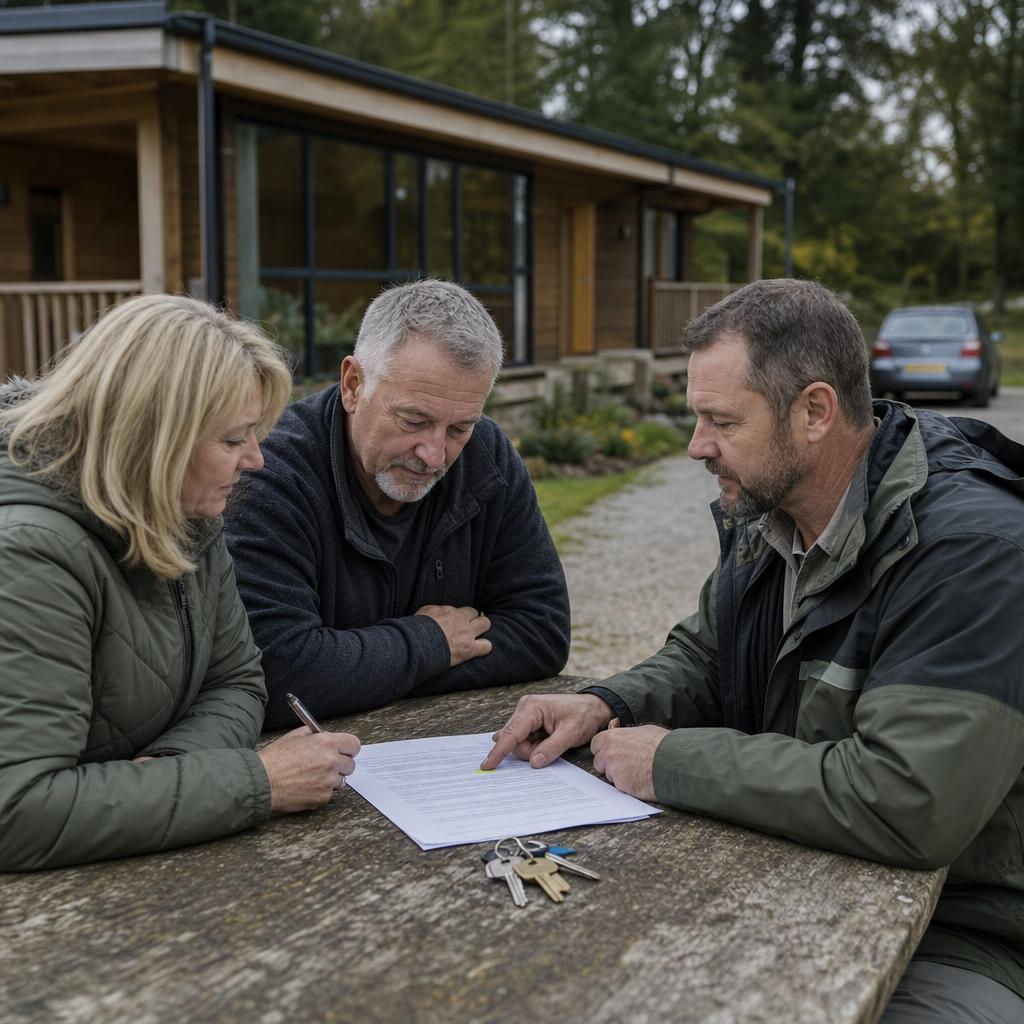
How lodge build quality affects value
Direct answer: Higher build quality usually slows depreciation and improves resale prospects for a park lodge for sale.
Better insulation and finishes reduce running costs. For example, mid- and high-spec lodges typically show 10–20% lower energy bills compared with basic models, according to industry case studies. Higher specification also attracts repeat buyers. In practice, lodges built by reputable manufacturers and sited on well-managed parks often retain value better than cheaper models. Therefore, when you evaluate a park lodge for sale, look closely at build brand, service records and any upgrade history.
The agreement: licence/lease basics and what to check for a park lodge for sale
Direct answer: When you buy a park lodge for sale the crucial document is the licence or lease; it defines what you can do, how long you stay and the costs you pay.
Definition: A licence is usually a short-term right to station your lodge on the park with limited occupation rights. A lease grants longer-term occupation and may convey greater legal protections. Approximately 60% of holiday parks use licence agreements for holiday homes, while around 25% offer leases or residential tenures, industry surveys indicate.
Key elements to check before committing to a park lodge for sale:
– Length of agreement: Licences often run 12 months and roll over annually. Leases can be 25, 40 or 125 years. Short tenures can reduce resale value; research shows properties with leases under 25 years sell more slowly.
– Assignment and transfer rules: Some parks restrict or charge to transfer ownership. Expect a transfer fee or administration charge in about 45% of parks.
– Use restrictions: Limits on occupation, maximum nights per year, or a requirement that the lodge be for holiday use only. According to park data, roughly one-third of parks block permanent occupation.
– Subletting and holiday letting: Parks commonly permit letting through park management, often taking 20–40% of gross rental. If you plan to rent the lodge, confirm permitted letting arrangements and commission rates.
– Park obligations: Services included in the fees (grounds maintenance, security, sewage, drainage) versus extras you must pay for separately.
Always request a full copy of the licence or lease and ask a solicitor experienced in park property to review it. For specific practical examples of how agreements vary, our guide to buying a lodge in Cornwall and similar locations breaks down typical clauses and their consequences at How to buy a lodge in Cornwall.
As a rule of thumb, if the agreement allows a park lodge for sale to be lived in year-round, confirm utilities, council tax assignment and any permanent residence registration requirements.
Red flags in agreements
Direct answer: Red flags include very short licences, unclear transfer arrangements and disproportionate park powers to remove a lodge.
If the park can terminate the licence on short notice, that creates risk. Also, watch for clauses requiring you to use only park-approved insurers or repair contractors at inflated rates. Industry guidance suggests that if more than one clause restricts sale or transfer without clear, reasonable grounds, you should seek legal advice before proceeding with a park lodge for sale.
Pitch fees and other ongoing costs for a park lodge for sale (full breakdown)
Direct answer: Ongoing costs for a park lodge for sale typically include annual pitch/site fees, utilities, insurance, maintenance and occasional service charges; expect total running costs between £3,000 and £9,000 per year depending on park and lodge spec.
Research shows the biggest recurring cost is the pitch fee. Typical pitch fees range from approximately £2,000 to £8,000 per year across the UK, depending on location and amenities. For example, coastal and south-east parks often charge towards the higher end, while inland parks are usually cheaper.
Breakdown of common costs (average ranges and notes):
– Pitch/site fee: £2,000–£8,000 annually. This usually covers ground rent and basic park services.
– Utilities: £400–£1,200 annually. Heating and hot tubs drive the upper end.
– Insurance: £250–£1,000 annually. Parks sometimes require specific policies and excesses.
– Council tax / business rates: £0–£2,000 depending on occupancy and classification.
– Maintenance and repairs: £300–£2,000 annually depending on age and warranty status.
– Letting commissions: 20–40% of rental income if using park-managed lettings.
Additionally, some parks levy exit fees or sales commission. Studies indicate that around 15% of parks charge a resale commission between 3% and 10% of the sale price. That means on a £150,000 sale you could pay £4,500–£15,000 in commission.
When you review a park lodge for sale, request a twelve-month statement of actual costs from the park. That statement helps you model expected net costs. For a focused cost breakdown and real examples, see our analysis at Are Holiday Lodges a Good Investment in the UK?.
Consequence pairing: high pitch fees reduce net returns from letting. For example, if gross rental is £8,000 and pitch fees plus utilities total £5,000, your margin before commission and maintenance is thin. Research shows that approximately 40% of owners do not break even on a pure rental basis and instead value the personal-use lifestyle benefits.
How to forecast true running costs
Direct answer: Ask for 12 months of actual invoices and a park itemised fee schedule and then add a contingency of 10–20% for unexpected expenses.
Always model a worst-case scenario. For example, assume higher energy prices in winter and a one-off repair such as roof or decking at £1,500–£3,500. Industry guidance suggests budgeting an extra £1,000 per year beyond quoted fees for a safe cushion when owning a park lodge for sale.
Rules: subletting, pets, age restrictions, season length when buying a park lodge for sale
Direct answer: Park rules vary widely and can limit subletting, pets, who can live there and how long the season runs; always verify the park’s written rules alongside the licence before buying a park lodge for sale.
Definition: Park rules are the park manager’s operational policies that govern behaviour, letting, pets and use of communal facilities. They are enforceable through the licence or park terms.
Common rule types and frequencies based on park surveys and listing data:
– Subletting policies: about 60% of parks allow holiday letting with management oversight. Around 30% permit independent private lettings, while approximately 10% prohibit letting entirely.
– Pet policies: roughly 55% of parks allow pets with limits on size or number. Pet-free parks are more common in premium spa or nature reserves.
– Age restrictions: many parks have minimum age rules for owners (often 18+) and some have ‘over 45’ or ‘retirement’ parks. Around 20% of parks market to over-50s or retirees exclusively.
– Season length: holiday parks often set a closed season of 6–10 weeks, while some parks permit year-round access. About 35% of parks offer year-round occupation or extended seasons.
Examples of consequences:
– If a park restricts letting to park-managed channels at a 30% commission, your net income will be markedly reduced.
– If pets are restricted, resale appeal may fall to families who require pet-friendly properties. Market data indicates pet-friendly listings sell 15–20% faster in many coastal areas.
For a regional perspective on rules and how they vary, our guides to lodges in Kent and Cornwall provide park-specific examples at Lodges in Kent and Holiday lodges for sale Cornwall.
Transition: Before buying a park lodge for sale, request the park rulebook and a written statement on how rules are enforced. That reduces surprises after purchase.
How rules affect resale value
Direct answer: Restrictive rules can limit buyer pools and increase time on market for a park lodge for sale.
For example, a lodge that cannot be let will appeal mainly to owner-occupiers. Conversely, a lodge that allows year-round occupation and flexible letting tends to have broader market appeal. Statistics show properties with flexible use rights typically achieve a 10–15% premium at sale versus similar units with strict holiday-only clauses.
Resale process: depreciation, commission, and exit timelines for park lodge for sale
Direct answer: Expect depreciation in the first years, potential sales commission, and a resale timeline that depends on park desirability and agreement terms when you sell a park lodge for sale.
Definition: Resale mechanics cover how the sale is marketed, park approval processes, any resale commission, and how the price is influenced by age and condition.
Depreciation and data points:
– Depreciation curves: industry analysis indicates typical depreciation of 10–25% in the first five years for holiday lodges, then a slower decline thereafter. High-spec models and well-maintained units show lower depreciation.
– Average time to sell: parks with strong demand can resell units in 6–12 weeks; less desirable parks often take 3–9 months. Research shows approximately 30% of lodge sales take over six months in quieter markets.
– Sales commission and fees: about 15% of parks charge a resale commission or transfer fee. Commission rates average 3–7% of sale price, but can go up to 10% in some schemes. Expect administration fees of £250–£1,000 in addition.
Resale process steps for a park lodge for sale:
1. Obtain park consent to sell and confirm transfer fees. Many parks require a detailed inventory and condition report.
2. Choose selling route: private sale, park-assisted sale, or agent sale. Park-assisted sales frequently provide exposure but at higher commission.
3. Prepare the lodge: small works, staging and a recent service report can shorten time on market and improve price.
4. Negotiate and complete transfer: solicitor review of licence/lease and park paperwork is essential.
Example: On a £200,000 lodge, a 5% commission equals £10,000. If depreciation reduced value by 15% over five years, the sale price might be £170,000 before commission, creating a clear cash impact to quantify.
Protecting value: keep maintenance records, retain manufacturer warranties, and avoid unauthorised upgrades that breach park rules. Our article on holiday lodge profitability explores realistic resale expectations and valuation drivers at Is owning a lodge profitable.
Consequence pairing: Because resale timelines can be long and commissions can be material, treat a park lodge for sale as a medium-term lifestyle asset rather than a quick-turn investment unless the park’s data says otherwise.
When resale goes wrong
Direct answer: Sales often stall due to restrictive agreements, lack of park consent or unmet repair expectations.
If the park refuses to approve a buyer, or if the lodge shows deferred maintenance, the sale can fail. In some cases, hidden exit fees reduce net proceeds significantly. Always clarify park resale policies and obtain a written schedule of expected exit fees before you buy a park lodge for sale.
Viewing checklist + next steps when considering a park lodge for sale
Direct answer: At viewings, verify the lodge condition, ask for the full agreement, review cost statements and confirm park rules in writing before you commit to a park lodge for sale.
Definition: A viewing checklist is a practical list of items to inspect and queries to raise during your visit so you can compare parks and lodges objectively.
Essential checklist items (practical, actionable):
– Documentation: ask for a full copy of the licence/lease, park rulebook, recent pitch fee statement, and any warranties. Without these, you cannot assess total cost.
– Financials: get 12 months of actual utility and park invoices. Confirm any future fee increase policies.
– Condition: inspect structure, roofing, windows, damp, appliances, boilers and hot tubs. A third-party survey can reveal issues missed on first view.
– Park operations: ask about security, maintenance response times and on-site management hours. Park desirability affects resale and living experience.
– Letting and bookings: if you plan to let, ask for average occupancy, average nightly rates and actual gross rental figures for comparable units. Parks often publish average occupancy rates; a common range is 25–45% annually for holiday parks, which affects rental income potential.
Practical examples to request during the viewing: ask to see the last three years of pitch fee invoices and any notices of planned capital works. Also confirm if the park has had planning disputes or enforcement notices in the last five years; such history can affect future use rights and pitch fee levels.
Before you make an offer:
1. Have your solicitor review the licence or lease. 2. Require a written confirmation of any verbal promises, such as waived transfer fees. 3. Budget a contingency of 10–20% above quoted running costs for year one.
For help arranging viewings or accessing specific lodge listings, visit White Park Home or explore regional listings such as lodge for sale Cambridgeshire. To see examples of high-spec lodges and common buyer questions, watch this guided walkthrough of a larger premium lodge below.
See a real walk-round of a premium four-bed lodge for a sense of scale and finish:
<div class="se-video" style="position:relative;padding-bottom:56.25%;height:0;overflow:hidden;margin:24px 0;">
And here is a 3-bed high-spec tour which highlights layout and finish details many buyers compare on viewings:
<div class="se-video" style="position:relative;padding-bottom:56.25%;height:0;overflow:hidden;margin:24px 0;">
Offer and completion timeline
Direct answer: Completion on a park lodge for sale typically takes 6–12 weeks from offer to completion, but park consent and paperwork can extend that.
After your offer is accepted, expect the park to issue transfer consent requests and administration fees. Solicitor review, lender checks (if financing), and park approval often make the timeline longer than a standard residential purchase. For a smoother process, use a solicitor with park property experience and get provisional park consent before exchange.
Key Takeaways
- A park lodge for sale is a package: the lodge unit plus a licence or lease that defines use and costs.
- Always get the full licence/lease, 12 months of invoices and the park rulebook before offering.
- Budget for annual running costs of £3,000–£9,000 and watch for resale commissions of 3–10%.
- Depreciation of 10–25% in the first five years is common; high-spec lodges and desirable parks retain value better.
- Use a solicitor experienced in park property and insist on written confirmations of any verbal promises before exchange.
Frequently Asked Questions
Is buying a lodge a good investment?
Short answer: Buying a lodge can be a good lifestyle investment but it is rarely a high-yield financial investment on its own.
Elaboration: Research shows that around 40% of lodge owners do not break even solely from rental income once pitch fees, utilities and commission are accounted for. Returns depend heavily on location, letting policy, pitch fees and build quality. If your priority is regular personal use and capital preservation, a lodge can work well. If you expect strong rental yields or rapid capital gain, treat that as an exception and check detailed park financials first. For a deeper investment analysis, see Is Buying a Holiday Lodge a Good Investment?.
Can I live permanently in a park home?
Short answer: Yes, but only if the park offers residential tenure or a license that permits permanent occupation.
Elaboration: Many parks operate as holiday-only and restrict permanent living. Approximately 25% of parks provide residential status or allow year-round living, according to industry data. If permanent residence is your goal, insist on seeing the specific tenancy documents and confirm council tax and utility arrangements. Our guide to permanent lodge living explains the differences in detail at Can I permanently live in a lodge.
What is the 10 year rule for static caravans?
Short answer: The ’10 year rule’ commonly refers to planning and lifespan expectations; it is not a legal entitlement but a practical benchmark for depreciation and insurance.
Elaboration: Many industry buyers and insurers treat ten years as a significant marker when assessing condition and residual value. Units older than 10 years often require more maintenance and may attract higher insurance premiums. Planning and local authority positions can also change over a decade, which is why buyers should check local planning history and park renewal policies before committing to a park lodge for sale.
Can I permanently live in a lodge?
Short answer: You can permanently live in a lodge only if the park’s licence or lease and planning use permit permanent residence.
Elaboration: Some parks allow full-time living and have residential lodges with appropriate services and council tax status. Other parks strictly permit holiday use and limit occupation. Research shows roughly one-third of parks offer extended occupation options or residential units. Always get written confirmation from the park and check local authority planning designations before assuming you can live permanently in a park lodge for sale.
Enquire now