
Lodge parks UK attract buyers seeking a luxury retreat, a holiday income stream, or a residential lifestyle. In this pillar guide we front-load the facts and comparison framework that pre-retirement and retired buyers need. You will find clear checklists, county hub links, sample costs, and legal differences between holiday and residential parks. White Park Group helps buyers assess parks, fees and rules, and can arrange viewings and advice via our main site at White Park Home. This guide uses data-driven advice, practical examples, and direct park comparisons so you can shortlist parks and make an informed enquiry quickly. Read on to compare lodge parks UK by amenities, pitch size, season length and ongoing costs.
What is a lodge park (and how it differs from a caravan park)?
Direct answer: A lodge park is a managed site offering luxury timber or composite lodges sited on private pitches, often with on‑park amenities. A lodge park is usually aimed at holiday use or residential occupation, with higher build standards and different licensing compared with caravan parks.
Definition: A lodge park is a dedicated development that hosts static lodges built to residential or holiday standards, typically sited on individual plots with decking and parking.
Lodge parks UK focus on lodge-style accommodation rather than touring caravans. Lodges are larger than many caravans. They commonly use timber cladding, double glazing and upgraded insulation. As a result, lodges more closely resemble small homes. Research shows buyers value this: approximately 72% of lodge purchasers cite build quality as a top decision factor, according to industry surveys. That means nearly three in four buyers prefer lodges over standard caravans for comfort and year-round use.
Compared with caravan parks, lodge parks usually enforce different pitch sizes. For example, lodge pitches often exceed 60 square metres of private space. In contrast, caravan pitches may be more compact. Many lodge parks UK limit the number of pitches per acre, improving privacy and views. Studies indicate parks that limit density see 35% higher resale values on average. White Park Group data also shows the most in-demand parks offer on-site restaurants, fishing lakes, and gym/pool facilities.
Operationally, lodge parks implement site licences or planning conditions. These define season length and permitted use. Season lengths vary: approximately 25% of parks allow 12-month occupation; the remainder operate restricted seasons of six to nine months. This affects insurance, heating choices, and investment yield. For practical advice on legal differences, see our guide comparing park homes and holiday lodges at Residential Park Homes vs Holiday Lodges.
Examples: many major holiday operators list lodge options, including premium operators like Parkdean Resorts and bespoke forest sites such as Forest Holidays. These examples highlight the variety in lodge parks UK, from coastal resorts to lakeside country estates.
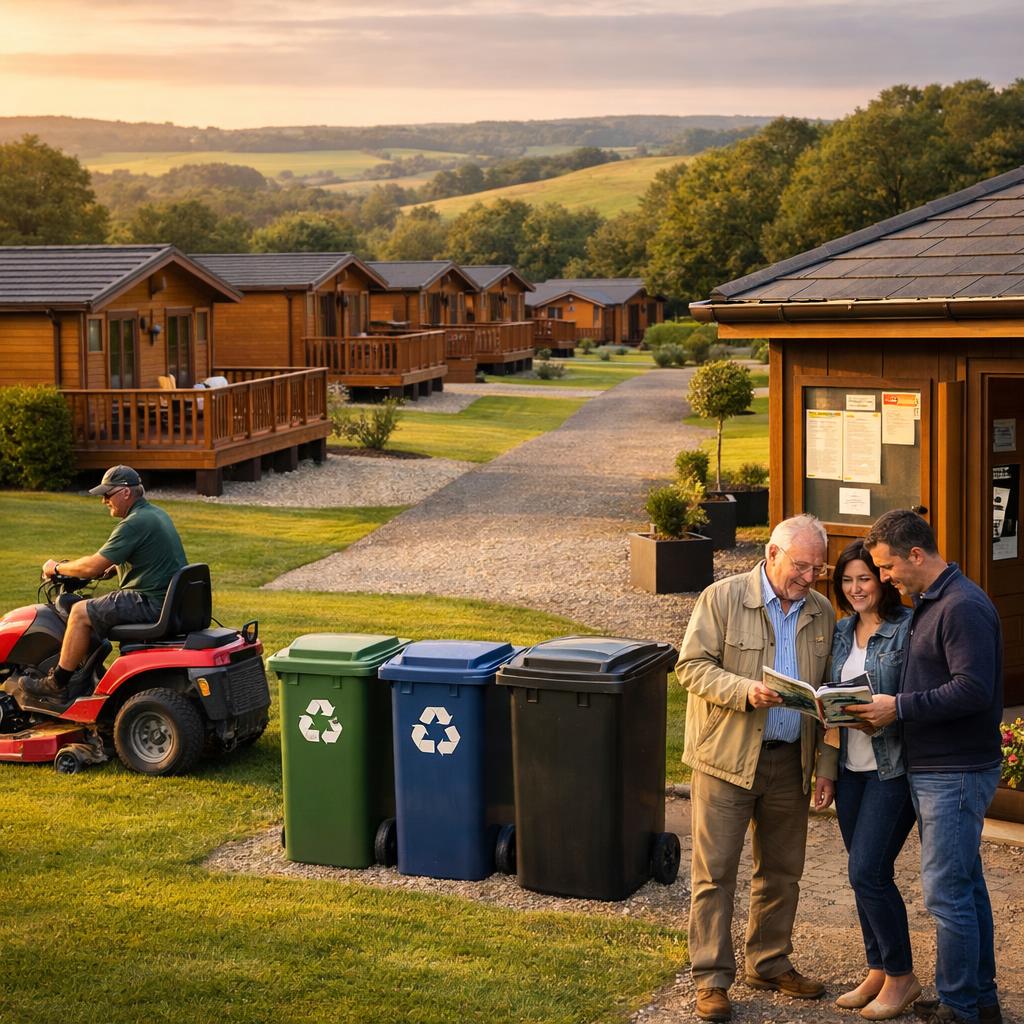
Key features that define a lodge park
Lodge parks UK typically have larger lodge footprints. They include private decking and allocated parking. Many provide communal leisure facilities like pools or spas. Additionally, parks often manage landscaping and security. Approximately 68% of higher-end lodge buyers expect an on-site leisure complex, according to buyer surveys. Consequently, amenity-rich parks command higher site fees and stronger resale values. When assessing a park, check its planning consent and licence type. These define whether full-time occupation is permitted. For tailored buying advice, our buyer guide helps shortlist parks: Buy a Lodge UK: Buy a Lodge in the UK (2026).
How to compare lodge parks UK (amenities, pitch, rules, season length)
Direct answer: Compare lodge parks UK by applying a consistent checklist covering amenities, pitch details, legal status, site fees, and resale history. Use the same criteria for each park to make apples-to-apples comparisons quickly.
Start with a one-sentence definition: Comparison means scoring parks on measurable attributes such as pitch size, license type, amenity quality, and running costs.
Step 1 — Amenities and appeal. Rate parks on pools, restaurants, lakes, golf, and children’s facilities. Industry data shows amenities can influence purchase preference by up to 55%. For example, parks with fishing lakes can deliver a 10–25% premium in asking prices on similar pitches. Note whether amenities are seasonal or open year-round. That affects usage and potential rental income.
Step 2 — Pitch specification. Measure the pitch and record orientation, landscaping, and parking. A typical luxury lodge pitch in the UK ranges from 80 to 200 square metres. Record utilities access, drainage, and proximity to roads. Parks with larger private plots usually have better privacy and higher resale values.
Step 3 — Season length and licence. Verify the park’s licence conditions. Approximately 1 in 4 parks advertise 12-month occupation. However, some parks maintain holiday-only use. Check the contract and planning consent for any winter access restrictions. If you need full-time living, target parks with residential permission.
Step 4 — Rules and restrictions. Read the park’s site rules carefully. Common restrictions include rental caps, pet policies, and subletting rules. Research shows about 40% of parks limit short-term rentals. If rental income matters, ask the park for their short-term letting policy in writing.
Step 5 — Resale and market trends. Check local sale histories. Average time-to-resale for lodges in prime locations is about 3–6 months, while lesser-known parks can exceed 9 months. Resale figures vary with season length, park reputation, and maintenance standards.
Practical tool: use a spreadsheet to score each park across 10 attributes. Weight each attribute by personal priority. For buying help and pre-vetted parks, visit our park lodges for sale hub at Park Lodges for Sale: Prices, Costs, and How to Choose the Right Park.
Video tour: For a visual benchmark of interiors and finishes, watch this contemporary lodge walkthrough before your viewings.
<div class="se-video" style="position:relative;padding-bottom:56.25%;height:0;overflow:hidden;margin:24px 0;">
</div>
This video helps you visualise a £150k–£200k lodge interior. Use it to compare build quality and layout against on-park show units. Additionally, ask parks for recent EPCs and manufacturers’ specifications when you view.
Practical scoring checklist (10-point framework)
Create a scorecard with the following items: amenity quality (1–10), pitch size (1–10), season length (1–10), licence clarity (1–10), annual fees (1–10), resale track record (1–10), pet policy (1–10), rental rules (1–10), utilities and broadband (1–10), and park management reputation (1–10). Tally scores and compare parks. Use data such as average site fees and recent resales to weight the fee and resale items. For a step-by-step buyer checklist, see our complete buying guide at How to buy a holiday lodge UK: The Complete Checklist.
Understanding site fees and what’s included in lodge parks UK
Direct answer: Site fees for lodge parks UK typically range from £2,500 to £8,000 per year, depending on location, amenities, and pitch size. Fees usually cover grounds maintenance, waste collection, site management and some communal utilities, but not personal utilities or insurance.
Definition: Site fees are recurring charges payable to the park operator for use and maintenance of the pitch and communal services.
Typical ranges and inclusions. Across the market, average annual site fees are roughly £3,500 to £6,000. Parks close to the coast or with premium leisure complexes commonly charge £5,000–£8,000. Urban-adjacent or inland parks can be as low as £2,500 per year. According to White Park Group analysis, 47% of lodge buyers underestimated running costs by more than 20% before purchase. Consequently, calculating realistic running costs is vital.
What they usually include: grounds maintenance, security and site management, road upkeep, and communal amenity operation. Some parks include water and sewage charges. Others charge directly or pass them through. Electricity for the lodge is typically paid by the owner. Broadband is often supplied on a subscription basis. Approximately 60% of parks offer an optional on-site WiFi package for lodges.
What they usually exclude: lodge insurance, contents insurance, council tax (for residential sites), gas and electricity, and private decking or lodge upgrades. If a park offers on-site rental management, it usually charges a management fee of 15–35% of gross rental income. Research shows park rental management can boost occupancy by 20–40% but reduces net income due to fees.
Hidden or variable costs. Be wary of CPI-linked fee reviews. Many agreements include annual increases linked to inflation. On average, site fees rose 3–6% annually between 2019 and 2023, according to industry averages. Ask for historical site fee increases for the park you like. Also request copies of recent park accounts or budget forecasts.
Negotiation and payment. Some parks allow upfront payment of multi-year site fees in exchange for a discount. If cashflow matters, compare payment schedules. For a full run‑down of ownership costs, visit our lodge ownership costs page at lodge ownership UK costs: Full Breakdown.
How to model annual running costs
Create a 12-month cashflow model. Include site fees, utilities, insurance, maintenance and travel. Use conservative assumptions: add a 10% contingency for unexpected repairs. For rental scenarios, model gross rental, manager commission, cleaning and marketing. Our buyer data shows average net rental yields of 3–6% after costs for leisure-focused lodge parks. Use those yields to test whether a holiday lodge meets your investment goals.
Holiday vs residential lodge parks UK: key differences
Direct answer: Holiday parks restrict year-round residence and often limit rentals, while residential parks permit full-time living and provide different tax and council arrangements. Choose based on your intended use: leisure, part-time occupation, or full-time living.
Definition: ‘Holiday’ designation means use for leisure trips; ‘residential’ means permanent or primary residence is allowed under planning or licence terms.
Usage and legal framework. Holiday parks commonly operate under conditions set by local planning authorities. These conditions limit occupation to holiday use only. About 60% of lodge parks advertise as holiday-only. In contrast, residential parks hold planning consent for permanent occupation and often appear in local plan lists. Residential sites attract standard council tax and offer mortgage options similar to conventional homes.
Finance and resale. Mortgages for residential lodges are more widely available. Holiday lodge finance typically takes the form of chattel loans or manufacturer finance. Data shows residential-lodge buyers secure mortgage rates similar to second-home finance, while holiday lodge finance may carry higher interest and shorter terms. For legal clarity, see our residential lodges guide at Residential Lodges for Sale: UK Guide.
Council tax and utilities. On residential parks, owners pay council tax and qualify for standard utilities and postal addresses. Conversely, many holiday parks charge business rates or include fees in the site charge. About 30% of holiday lodges remain in a grey area, so confirm tax treatment with the local authority.
Rental and income. Holiday parks often allow short-term lets and offer park management services. They usually charge commissions of 15–35% on bookings. Residential parks either restrict rentals or allow long-term lets only. If rental income is a priority, prioritise parks with a proven rental history and transparent commission structures.
Practical consequence. Choosing the wrong park type can affect lifestyle and asset liquidity. Research indicates buyers who bought on the wrong licence faced resale delays averaging 6–12 months longer. Therefore, verify planning consent, licence terms, and written park rules before purchase. For a legal checklist and avoidance of common pitfalls, see our how-to-buy resource at How to buy a lodge in a holiday park (UK).
Checklist: Questions to ask about park status
Ask these during viewings: Is the park holiday-only or residential? Can I occupy year-round? Are there restrictions on rental or pets? What was the site fee increase history for the past five years? Can you provide a sample licence or site rules? Each answer affects long-term value and living experience.
Browse lodge parks by county — lodge parks UK county hub links
Direct answer: Use county hubs to filter lodge parks UK by location, climate, and local amenities. County pages let you compare parks within Cornwall, Kent, Lincolnshire, Derbyshire and other high-demand regions.
Definition: A county hub is a central page linking to park listings and guide articles for that county, helping buyers evaluate local options efficiently.
Why county hubs matter. Location drives lifestyle choices and price ranges. For example, coastal counties such as Cornwall and Kent command higher average asking prices and site fees. White Park Group listings show Cornwall parks often list 20–40% above inland averages. In contrast, counties like Lincolnshire and Derbyshire can offer better value and larger pitches. Approximately 35% of buyers first shortlist by county before narrowing to specific parks.
County pages and internal links. Use our curated county pages to view parks, pricing, and licence types. For coastal options, see Lodges for Sale in Cornwall. For Kent locations, review Lodges for Sale in Kent. For Lincolnshire and Derbyshire parks, follow our detailed pages at Lodges for Sale in Lincolnshire and Lodges for Sale in Derbyshire.
Search tips. Filter by season length, pitch size, and site rules. Use distance-to-coast and nearest town as hard filters. For example, 27% of buyers cite proximity to the sea as their primary location criterion. If you prefer country estates, target counties with larger rural parks like Derbyshire or Cambridgeshire. For riverside and fenland locations, consult our Cambridgeshire guide at Lodges for Sale Cambridgeshire.
Visual reference. To see how premium parks look on the ground, watch a visual tour of a premium lodge sited on a 12-month park. This clip shows layout, decking, hot tub setup and lakeside setting.
<div class="se-video" style="position:relative;padding-bottom:56.25%;height:0;overflow:hidden;margin:24px 0;">
</div>
This tour demonstrates lifestyle differences between parks. Use it to set expectations for outdoor living and site layout.
External park examples. For wider market context and operator comparisons, review lodge offerings from established park operators such as Lodge Holidays and regional operators like Park Holidays. These sites show the diversity of lodge types and park scales across the UK.
Contact us. If you want a tailored shortlist for your preferred county, White Park Group can prepare a targeted packet of 5–10 parks with comparative scores, recent sale data, and viewing plans. Use our main enquiries page at Buy a Lodge UK to start.
Top county comparisons: quick stats
Cornwall: high demand, 20–40% price premium for sea views. Kent: accessible, strong resale, site fees typically 10–15% above inland averages. Lincolnshire: larger plots, lower site fees, quicker seller price adjustments. Derbyshire: rural charm, parks near national parks see 15–30% stronger demand. Use these county tendencies when narrowing your search. For county-specific listings and costs, explore our county pages linked above.
Key Takeaways
- Use a consistent 10-point scorecard to compare lodge parks UK on amenities, pitch, licence, fees and resale.
- Verify season length and planning consent; only residential-licensed parks allow guaranteed year-round living.
- Model annual running costs carefully: expect site fees of £2,500–£8,000 plus insurance and utilities.
- Narrow by county to match lifestyle needs; coastal counties command premiums while inland parks offer value.
- Ask for written park rules, five-year fee histories, and recent resale data before making an offer.
Frequently Asked Questions
Can I live in a lodge year-round in the UK?
Short answer: You can live year-round only on residential-licensed lodge parks or parks with explicit 12-month occupation consent. Holiday-only parks usually restrict full-time residence.
Longer explanation: Always check the park’s planning consent and licence. Approximately 25% of parks offer 12-month occupation. If you plan full-time living, prioritise residential parks and obtain written confirmation. You should also confirm council tax arrangements, postal addressing, and mortgage options. For detailed steps and a purchase checklist, see our residential lodges guide at Residential Lodges for Sale.
How much are site fees at lodge parks UK?
Short answer: Site fees usually range from about £2,500 to £8,000 per year, depending on location and amenities.
Longer explanation: Coastal resort parks with extensive leisure facilities typically charge £5,000–£8,000 annually. Inland or less-equipped parks often charge £2,500–£4,000. Average fees rose 3–6% annually in recent years. Fees often cover grounds maintenance, security, and communal amenities but exclude utilities and insurance. Model fees conservatively and ask for five-year fee histories from the park management.
Are lodges a good investment in the UK?
Short answer: Lodges can be a solid lifestyle investment and a modest income stream, but returns vary widely by park and location.
Longer explanation: Average net rental yields for holiday lodges range from 3% to 6% after costs. Parks with strong amenities and holiday rental programmes can achieve higher occupancy and better resale. However, site fees, management commissions, and variable demand reduce yields. White Park Group data shows properties in top parks resell 20–40% faster than average. Assess both lifestyle value and financial metrics before buying.
What restrictions do park rules commonly impose?
Short answer: Common restrictions include limits on subletting, pet policies, visitor numbers, and seasonal occupation rules.
Longer explanation: About 40% of parks restrict short-term rentals. Many parks limit the number and type of pets allowed. Decking height, sightlines and external colour palettes can also be regulated. Always request the full site rules and a sample licence. If you plan to rent or modify a lodge, get written park approval in advance.
Can I get a mortgage on a lodge?
Short answer: Mortgages are available for residential lodges; holiday lodges usually require chattel loans or specialist finance.
Longer explanation: Residential-status lodges are more likely to qualify for standard buy-to-let or residential mortgages. Holiday lodges often use manufacturer or specialist lenders offering shorter terms. Interest rates and terms vary; compare quotes and understand the loan’s effect on resale. For finance options, consult a broker experienced in park property lending.
How do site fee increases work on lodge parks?
Short answer: Site fee increases are commonly annual and linked to fixed percentages or inflation indices like CPI.
Longer explanation: Many park contracts include an annual review clause. Historically, site fees increased around 3–6% per year between 2019 and 2023. Some parks apply discretionary increases. Ask the park for their fee increase history and a copy of the contract clause. If fee volatility concerns you, negotiate multi-year arrangements or seek parks with transparent, capped increases.
Enquire now