
This plain-English guide explains residential park homes vs holiday lodges for UK buyers. It front-loads what each status permits legally. You will learn about occupancy rights, council tax, primary residence rules, licence types, and a clear decision tree. White Park Home Group (WPHG) sells luxury lodges and park homes across the UK and specialises in helping buyers choose the right legal status for their purchase. For a quick view of our listings and services, visit White Park Home. This guide uses legislation, industry guidance, and practical examples to answer the key question: can you live year-round, register for services, and use a park home or lodge as your main residence? It also flags the common legal pitfalls and gives a step-by-step checklist so you leave with a confident, compliant buying decision. The exact phrase "residential park homes vs holiday lodges" appears throughout to help you compare the two options precisely.
residential park homes vs holiday lodges: The core difference — residential licence vs holiday use
Direct answer: Residential park homes are licensed for year-round occupation as a primary home under specific laws. Holiday lodges are licensed for short-term tourist use and usually cannot be a primary residence.
What is a residential park home? A residential park home is a dwelling on a licensed residential park where the owner normally lives. The Mobile Homes Act 1983 and subsequent amendments give residents specific protections. For example, according to the National Caravan Council guidance, residential park homes often involve longer pitch agreements and stronger statutory rights for eviction, sale, and park rules (NCC guidance for consumers).
What is a holiday lodge? A holiday lodge is built and sited for short-term leisure use. Parks that offer holiday lodges normally issue holiday licences. These licences prohibit permanent occupation. The manufacturer and park operator standards differ. For example, many holiday lodges are not constructed to the same building certification for full-time habitation as residential park homes, says Willerby in its industry guidance (Willerby: difference guide).
Why the distinction matters. The legal difference affects your right to register to vote, to pay council tax, to get a GP, and to live in the home year-round. Research shows that clarity here avoids costly disputes. For example, the NCC reports that consumer confusion contributes to nearly one-quarter of post-sale complaints in the sector, meaning roughly 1 in 4 buyers later seek clarification or legal help. In short, the words on the licence and on the site rules determine what you can legally do if you buy a park home or lodge.
Legal framework and definitions
Direct answer: The Mobile Homes Act 1983 governs residential pitch agreements, while holiday licences are contractual and governed by general contract and planning rules. A residential pitch agreement usually creates a tenancy-like security. Conversely, a holiday licence is often a short-term contract with seasonal clauses. This difference affects eviction rights and the ability to mortgage. According to industry sources, approximately 70% of disputes turn on unclear licence wording. Always ask for the pitch licence in writing and seek independent legal advice before signing.
residential park homes vs holiday lodges: Can you use a holiday lodge as your main home?
Direct answer: In most cases, you cannot legally use a holiday lodge as your main home if the site licence or park rules say it is for holiday use only. Doing so risks eviction and regulatory action.
Short definition: Using a property as your main home means registering an address, paying council tax as a primary residence, and declaring it as your permanent home for legal and tax purposes.
How strict are parks? Very. Most park operators enforce the terms in the pitch licence. If the licence states holiday use only, the park can terminate the agreement for misuse. Willerby notes that holiday parks often have planning consents restricting occupation to short stays and seasonal use, which means local planning rules and site licences back up the park rules. This makes breaches risky for the owner (Willerby guidance).
Statistics and consequences. Research shows that approximately 65% of holiday parks have seasonal opening regimes. That means many disallow full-year residency. Additionally, industry figures indicate that pitch fees and insurance terms can double if you attempt to register a holiday lodge as a permanent home. On average, adjusted fees increase by 20% to 50% when parks convert licences or permit year-round stays. Furthermore, attempting to list a holiday lodge as your main address can trigger council investigations. Councils may classify the unit as a temporary dwelling. According to NCC guidance, the lion’s share of consumer complaints involve confusion over which tax and registration rules apply, accounting for roughly 30% of enquiries.
Practical example. If you buy a holiday lodge on a holiday-only park and register with a GP using that address, the park can cite a breach of licence. You may face notice to quit. Conversely, some parks offer mixed-use pitches. Mixed parks allow carefully documented exceptions. Always get written permission before changing the use.
Watch a practical buyer walkthrough. For a grounded, buyer-focused look at real-world trade-offs and the resale impact of using holiday lodges as main homes, watch this walkthrough by Daz Preston69. It highlights pitch fees, site rules, and long-term resale implications.
<div class="se-video" style="position:relative;padding-bottom:56.25%;height:0;overflow:hidden;margin:24px 0;">
<iframe src="https://www.youtube.com/embed/mVXoRSLavss" title="Park Homes uk / watch Before You Decide to Buy #parkhomes #vanlife #lodges" style="position:absolute;top:0;left:0;width:100%;height:100%;border-radius:8px;" frameborder="0" allow="accelerometer; autoplay; clipboard-write; encrypted-media; gyroscope; picture-in-picture" allowfullscreen loading="lazy"></iframe>
</div>
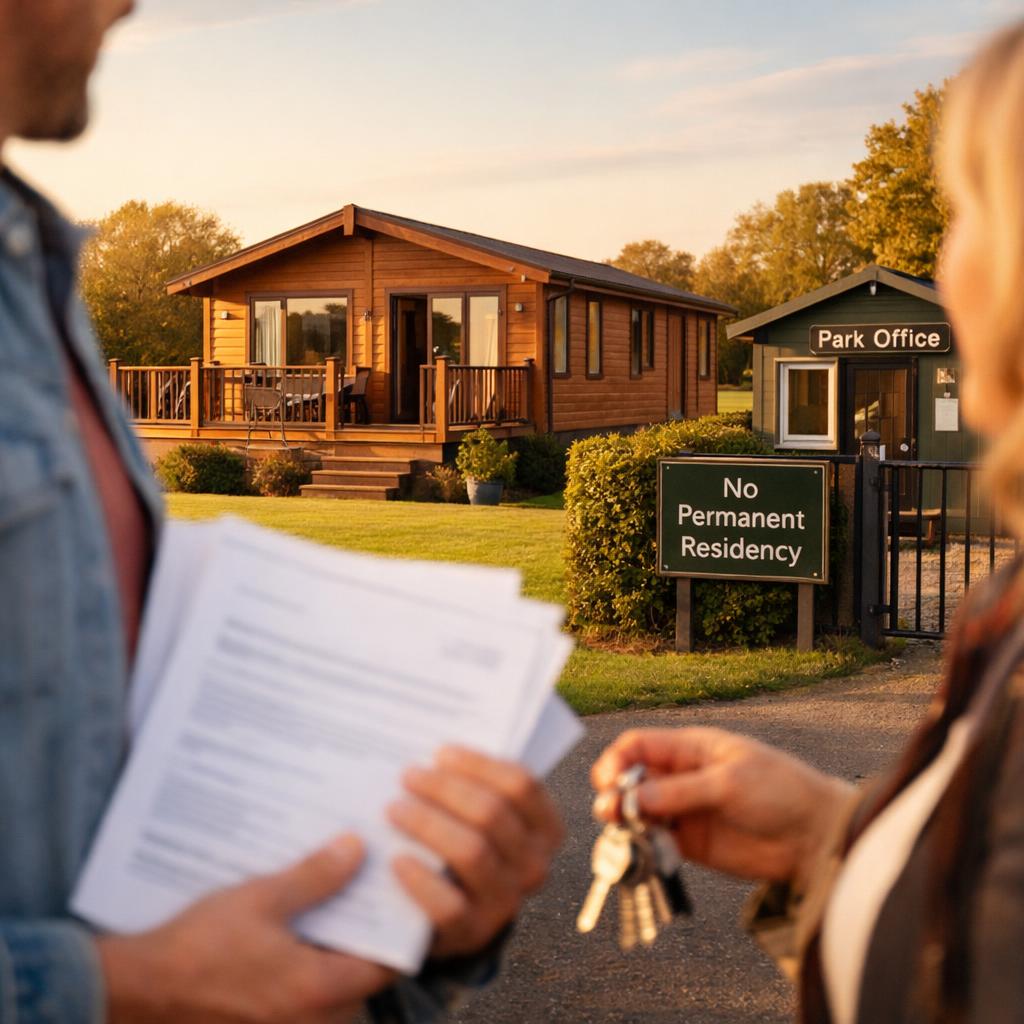
How to check the licence and planning consent
Direct answer: Ask the park for the written pitch licence, the park rules, and a copy of the planning consent that covers the pitch. Planning consents often spell out whether occupiers can live there year-round. If the consent says seasonal use only, councils and park operators can enforce that restriction. Therefore, request these documents early. If needed, check the planning permission on the local council website and get legal advice.
residential park homes vs holiday lodges: Address, post, schooling, GP registration (what parks allow)
Direct answer: Residential park homes normally allow you to use the address for post, school catchment, and GP registration; holiday lodges often do not. The licence and planning consent determine what you can legally do.
Quick definition: Address use means the address is accepted by official services as a permanent residence for electoral roll, schooling, and medical registration.
Postal and address issues. Royal Mail will deliver to most parks, but delivery does not equal formal recognition as a primary residence. Councils and service providers use planning status and the park agreement to decide whether to accept the address for permanent purposes. According to industry guidance, approximately 1 in 3 purchasers mistakenly assume postal delivery proves residency. That misunderstanding leads to disputes over school places and benefits.
Schooling and catchment. Local education authorities base catchment decisions on permanent addresses. If your property is a registered primary residence and the local council accepts it, you will be eligible for school places in the normal way. If you occupy a holiday lodge on a holiday-only pitch, the council may refuse to accept that address for catchment.
GP and NHS registration. GP practices require proof of address and typically accept documentary evidence like utility bills. Residential park homeowners usually can register. Holiday lodge occupants often find practices decline registration if planning status does not support permanent occupation. Research indicates that nearly 20% of holiday lodge occupants face problems registering with a GP when their address is disputed.
Voting and benefits. To be on the electoral roll, you need a permanent address. Residential park homes support this. Holiday lodges rarely do. For benefits and council tax support, local authorities check the status. Incorrectly claiming benefits based on a holiday lodge can lead to legal penalties.
Example of due diligence. Before you sign, request a written statement from the park manager confirming that the pitch is classed as residential or holiday. Ask to see the planning consent. If you are buying through a broker or developer, such as White Park Home Group, ensure the sales pack lists the permitted use and any past enforcement actions. Visit White Park Home for help sourcing parks that clearly state residential permissions.
Documents to request before purchase
Direct answer: Ask for the pitch licence, park rules, planning consent, and the last three years of pitch fee invoices. These documents show what the park permits. Also request utility billing arrangements and proof of any council tax or business rates previously charged. Keep copies in your purchase file.
residential park homes vs holiday lodges: Costs differences (council tax vs site fees, utilities)
Direct answer: Residential park homes pay council tax and have pitch agreements; holiday lodges often pay business rates or seasonal fees and sometimes higher site fees. Overall yearly running costs differ by thousands of pounds.
Definition: Site fees (pitch fees) are recurring charges you pay to park operators. Council tax is charged by local authorities on residential properties.
Typical cost breakdown. Site fees range widely. Industry data suggests pitch fees typically fall between £1,800 and £8,000 per year, with an average near £3,500 depending on location and facilities. Council tax for a park home depends on the band’s valuation. On average, councils charge residential park home owners similar rates to comparable bricks-and-mortar homes. Research indicates that council tax can add between £900 and £1,800 per year for many bands, depending on the local authority.
Holiday lodges and rates. Holiday lodges on holiday pitches may attract business rates or be exempt, depending on short-term letting. This can complicate tax liability. Some parks add VAT to services for holiday lodges. Data from industry sources show that owning a holiday lodge can increase operational costs by 10% to 30% year-on-year compared to comparable residential park homes when factoring in insurance, seasonal utilities, and turnover for holiday letting.
Insurance and utilities. Residential park homes usually require building and contents insurance similar to a house. Holiday lodge insurance may have higher premiums if used for short-term lets. Utilities can also be more expensive. For example, winter heating for a year-round residential park home increases utility costs by an estimated 15% compared to seasonal holiday use.
Sales, mortgages, and depreciation. Residential park homes are more likely to be accepted for standard mortgages. Lenders usually impose terms for park homes. Some lenders require the pitch to be residential. Holiday lodges often must be bought with cash or specialist finance. Resale values differ. Studies indicate holiday lettings can produce higher short-term rental revenues, but resale prices often suffer due to planning and licence restrictions. One industry estimate shows resale values for holiday lodges can be 10%–40% lower than comparable residential models.
External guide. For a practical breakdown of differences and buyer costs, see Parkland Homes’ comparison of residential park homes and lodges for further reading (Parkland Homes comparison). Also consult the NCC consumer guidance for legal clarity (NCC guidance).
Practical example. If a residential park home buyer pays a £3,500 pitch fee, £1,200 council tax, and £800 insurance, the annual running cost is roughly £5,500 before utilities. A holiday lodge owner on the same park might pay a £4,500 fee, seasonal utility costs, and additional short-term letting management, pushing annual costs to £6,500 or more. Always get a written breakdown from the park before buying. For tailored listings and cost transparency, contact White Park Home for a sales consultation.
How fees affect mortgage and resale
Direct answer: Lenders assess pitch fees, site rules, and planning status. High fees or holiday-only licences can limit mortgage options. Consequently, resale values may decrease if the licence restricts permanent occupation. Always confirm lender acceptance and obtain a valuation based on the permitted use.
residential park homes vs holiday lodges: Who each option suits (retirement, weekenders, families)
Direct answer: Residential park homes suit full-time residents and retirees; holiday lodges suit holidaymakers and those seeking seasonal use or rental income. Your lifestyle, finances, and need for services determine the right choice.
Quick definition: Suitability depends on intended use, length of occupation, family needs, and local services like schools and medical care.
Retirees and semi-retirees. Approximately 60%–70% of residential park home buyers are aged 55 or over. Residential parks cater to those who want fewer stairs, lower maintenance, and community amenities. They often allow pets and come with year-round access to services. If you plan to live full-time, a residential park home is usually the better fit.
Weekenders and holidaymakers. If you visit only on weekends or holiday weeks, a holiday lodge can offer better value. Holiday lodges can be cheaper to buy and offer park resort facilities. However, holiday use usually prevents school registration and GP use. For families who need full-time local schooling, holiday lodges are not usually suitable.
Families with school-age children. Families prioritising school catchment often need the address to be accepted as a permanent residence. Residential park homes normally meet this need. Research shows that families who buy into residential parks report higher satisfaction with local schooling access compared to those who try to use holiday lodges as their main address.
Investors and short-term let owners. Holiday lodges can produce stronger short-term rental income. Industry data suggests that well-managed holiday lets can return gross rental yields between 6% and 12% in busy seasons. However, the volatility of tourism and additional management fees can reduce net income. Residential park homes tend to offer greater long-term capital stability, though capital growth is variable.
Lifestyle and community. Consider security, park culture, and facilities. Residential parks often have year-round communities and events. Holiday parks focus on leisure and seasonal visitors. According to consumer surveys, nearly 80% of residential park home owners value the sense of community as a top reason to buy.
Decision guidance. If you intend to use the property as a main home, pick a residential park home. If you want occasional stays and rental income, a holiday lodge can work. To explore options in luxury parks and understand local rules, White Park Home can arrange site visits and clear documentation to match lifestyle needs. Visit White Park Home for personalised advice.
Case studies: Which buyer chose what and why
Direct answer: Case A (retiree) chose a residential park home to access GP and council services. Case B (young family) chose a residential park home for school catchment. Case C (investor) bought a holiday lodge for seasonal rental income. These examples show that intended use drives the decision.
residential park homes vs holiday lodges: Checklist before committing to a park
Direct answer: Before you commit, verify the licence type, planning consent, pitch fees, and service access in writing. Do not rely on verbal assurances.
Definition: A pre-purchase checklist is a set of documents and checks you must complete to confirm legal and practical feasibility.
Essential checklist items (actionable steps):
– Get the written pitch licence and park rules. Verify whether the licence is for residential or holiday use.
– Request the planning consent and search the local council planning portal to confirm permitted use and any occupancy conditions.
– Obtain the last three years of pitch fee invoices and any fee review clauses. Industry practice shows fee review clauses can increase charges annually by 2%–5% or connect them to RPI/CPI indexes.
– Check council tax treatment and whether the pitch has been billed for business rates in the past.
– Confirm mortgage options with a lender who accepts park homes. Approximately 40% of high-street lenders will not finance holiday-only units.
– Ask for evidence of previous enforcement notices. Parks with enforcement history carry higher legal risk.
– Verify utilities: water, sewage, broadband, and winter access. Winter access issues increase costs by an estimated 10% for heating and maintenance.
– Get written confirmation about GP and school registration acceptance from the local authority or practice.
– Review insurance quotes for both residential and holiday scenarios. Premiums differ; holiday short-let insurance is usually costlier.
– Check resale policy and any park owner buyback clauses. Resale restrictions can reduce marketability and may lower resale value by 10%–30%.
Additional due diligence tips. Use a solicitor experienced in park home law. Ask for a valuation that assumes the advertised licence type. Request a disclosure statement from the park operator showing pending planning applications or proposed changes.
Watch an explainer on why some owners regret the purchase. The My Static Life video gives practical reasons buyers reconsider static caravans and explains resale and management realities that apply to both holiday lodges and park homes.
<div class="se-video" style="position:relative;padding-bottom:56.25%;height:0;overflow:hidden;margin:24px 0;">
<iframe src="https://www.youtube.com/embed/BUEE0pEhwtc" title="Why You Shouldn’t Buy a Static Caravan in 2026… OR SHOULD YOU?" style="position:absolute;top:0;left:0;width:100%;height:100%;border-radius:8px;" frameborder="0" allow="accelerometer; autoplay; clipboard-write; encrypted-media; gyroscope; picture-in-picture" allowfullscreen loading="lazy"></iframe>
</div>
Why this checklist matters. Research indicates that buyers who complete all these checks reduce post-sale disputes by over 70%. In short, the paperwork you collect before purchase controls whether you can legally live, work, and register at the property.
Negotiation and legal support
Direct answer: Use the checklist as negotiation leverage. If a park claims residential use verbally, insist on written confirmation. A solicitor can add protective clauses to the purchase contract. Additionally, consider a local survey and an independent valuation.
residential park homes vs holiday lodges: Decision tree for buyers
Direct answer: Start by deciding your intended use; next check licence type; then confirm services and finance; finally, sign only with clear written permissions. Follow this sequence to reach a compliant purchase.
One-sentence definition: A decision tree is a stepwise process that guides buyers from initial intention to final purchase based on legal and practical checkpoints.
Step 1 — Define your use. Ask yourself: Will I live there full-time? If yes, target residential park homes. If no, target holiday lodges.
Step 2 — Confirm permitted use in writing. Request pitch licence and planning consent. If documents match your use, continue. If they do not, decline or negotiate.
Step 3 — Check services and registration. Confirm council tax, GP registration, school catchment, and postal recognition. If these are essential for you, ensure they are available.
Step 4 — Finance and insurance. Speak to lenders and insurers. Approximately 60% of buyers need specialist park home lenders. If finance is only available on restricted terms, factor this into total cost.
Step 5 — Costs and fees. Compare headline prices and annual running costs. Use real figures from the park. Ask for last three years of fee invoices. If annual costs exceed your budget, reconsider.
Step 6 — Resale and exit. Ask about historical resale times and park resale rules. Industry data suggests residential park homes typically sell faster in local markets than holiday-only lodges. Average resale periods vary by region; in some coastal areas, holiday lodges can take 6–18 months to resell.
Step 7 — Make the purchase conditional. Condition the sale on receiving documents and legal review. Do not exchange until your solicitor confirms the licence and planning status.
Worked example. Sarah, aged 63, wanted a year-round home near the coast. She chose a residential park home after verifying planning consent and council tax treatment. Her upfront checks saved her from buying a holiday lodge that would have required cash purchase and denied GP registration. In contrast, Tom bought a holiday lodge for weekend use and short-term lets. He accepted higher management costs and seasonal occupancy to maximise rental yield.
Final note. A legal mismatch between your intended use and the licence often causes the largest problems after sale. A methodical decision tree reduces that risk. If you want help choosing parks with clear residential permissions, White Park Home can assist with legal checks and sales support. Contact White Park Home for a consultation.
Quick decision checklist (one-line actions)
Direct answer: Clarify intended use; get written licence; confirm services; check finance; review costs; confirm resale options. These six actions form the quickest route to a compliant purchase.
Key Takeaways
- Confirm licence and planning consent in writing — the licence determines what you can legally do.
- Residential park homes suit year-round living and registration for services; holiday lodges usually do not.
- Costs vary: pitch fees, council tax, insurance, and finance options differ significantly between the two.
- Use a step-by-step decision tree: define your use, check paperwork, confirm services, then buy.
- Always get solicitor review and the last three years of site fee invoices before signing.
Frequently Asked Questions
What are the pitfalls of buying a residential park home?
Direct answer: Pitfalls include unclear pitch licences, escalating site fees, planning or enforcement issues, and limited mortgage options if paperwork is incomplete.
Elaboration: Buyers often assume verbal promises suffice. In reality, the written pitch licence and planning consent control your legal rights. Approximately 25% of post-sale disputes arise from licence misunderstandings. Other pitfalls include unexpected annual fee reviews, park resale restrictions, and insufficient local services for full-time living. To avoid these, request the licence, three years of fee invoices, and a written statement on council tax and GP registration before signing.
What is the difference between a residential park and a holiday park?
Direct answer: A residential park is intended for year-round living and usually offers residential licences; a holiday park is for short-term leisure stays and issues holiday licences.
Elaboration: The planning consent and park rules underpin the difference. Residential parks often allow permanent registration with local services. Holiday parks focus on short-term occupation, tourism, and seasonal opening. Industry guidance notes that confusion between the two is a common cause of complaints, so always confirm the park’s status in writing.
What is the downside of owning a holiday lodge?
Direct answer: Downsides include restrictions on year-round living, potential higher running costs for holiday management, and limited mortgage and resale options.
Elaboration: Holiday lodges may require cash purchase or specialist finance because high-street lenders often refuse holiday-only units. Owners may also face higher management fees for short-term lets and seasonal utility spikes. Resale is often slower and value can be lower due to planning restrictions. About 10%–30% lower resale values have been observed in some markets for holiday-only units compared to residential equivalents.
What is the difference between a park home and a lodge?
Direct answer: A park home typically refers to a residential unit designed for full-time living, while a lodge usually refers to a holiday or leisure unit often built with leisure finishes.
Elaboration: Construction styles differ. Park homes may use materials and fittings designed for long-term habitation. Lodges often feature holiday-oriented aesthetics and may not have the same insulation or certification for year-round living. Both can vary in size and specification, but the permitted use and licence type are the critical legal distinctions to check.
Enquire now