
If you are researching luxury lodges for sale UK, this guide is a single, practical resource. It explains what you can buy, where to buy, what prices look like, and the ownership rules that matter. White Park Home Group helps buyers compare parks and arrange viewings. You will find a curated shortlist of top regions, transparent cost breakdowns, and a clear enquiry pathway to request a brochure and consultation. The content below combines market data, owner experience, and step-by-step actions. It is written for UK buyers aged 35–70+ who want a holiday retreat, semi-retirement base, or an investment lodge. For a direct conversation and personalised options you can visit White Park Home Group to request a brochure or book a consultation. Throughout this article we reference industry sources, show realistic budgets, and explain legal occupancy differences so you can decide with confidence.
Luxury lodges for sale in the UK (what you can buy)
Direct answer: Luxury lodges for sale UK include new-build high-spec models and well-appointed pre-owned lodges. They range from compact two-bedroom designs to expansive 40 x 20 foot luxury units with bespoke finishes.
What is a luxury lodge? A luxury lodge is a fully furnished park home-style holiday property that combines domestic-style fittings with park siting. The definition covers options built for holiday use and those built to residential standards.
You can buy three main types. New bespoke lodges. These come from manufacturers such as Omar and Wessex. They feature integrated kitchens, double glazing, and premium cladding. Second-hand and ex-demo lodges. These may offer 30–60% lower upfront cost than new models. Resort-placed lodges. These sit within managed parks and often include leisure facilities and management services.
Market snapshot and examples. New luxury lodges typically cost between £120,000 and £350,000. Pre-owned lodges commonly sell from £40,000 to £180,000. Research shows many buyers pay a 10% deposit to reserve a new lodge. Park operators such as Parkdean list lodges across 55 parks and support over 20,000 owners, giving scale and resale support; see the Parkdean brochure for reference at Parkdean’s lodges for sale.
Practical examples. A standard new 40 x 20 luxury lodge with two bedrooms may cost £160,000. A premium model with 3 beds, vaulted ceilings, and integrated appliances can exceed £300,000. A well-located pre-owned lodge might sell for £55,000 after a recent refurbishment.
How buyers use lodges. Approximately 60–75% of parks operate on a holiday-use basis, restricting year-round residential living. About 25–40% of buyers choose lodges for regular holidays, while 10–15% move in full-time after confirming residential status. These usage patterns influence both price and licensing.
Relevant browsing. For a broad marketplace view of lodge types and manufacturers, explore Omar’s luxury lodge range at Omar luxury lodges and Darwin Escapes’ ownership pages at Darwin Escapes ownership.
Typical specifications and finishes
Direct answer: Luxury lodges often include full-size kitchens, en-suite bathrooms, high-performance glazing and larger rooflines. They are specified closer to a small house than a caravan.
Most luxury lodges include integrated appliances, composite decking, and high-spec bathrooms. Manufacturers commonly provide a 12-month warranty and structural guarantees. A new lodge often comes with double or triple glazing. It also has timber or composite exterior cladding.
For example, a flagship 40 x 20 Prestige or Omar lodge might offer vaulted ceilings, gas central heating, and appliances by known brands. These features contribute to higher resale value. In contrast, older pre-owned models may require replacements for boiler or cladding, affecting running costs and bargaining power.
When viewing, inspect for insulation, damp, and wiring condition. Ask for an inventory of included fixtures. If you plan longer stays, ask the park about broadband speeds and winterisation packages.
Best UK regions for luxury lodge ownership (quick comparison)
Direct answer: The best UK regions for luxury lodge ownership depend on your priorities: coastal scenery, countryside peace, proximity to airports, or rental potential. Choose a region that matches use and access needs.
Region definition: Each region offers a different mix of scenery, seasonality, and transport links. Coastal parks typically have stronger holiday rental demand. Lake District and Cotswolds parks offer scenic year-round appeal. South West parks attract beach buyers. Midlands parks often give lower pitch fees and easy motorway access.
Comparison at a glance. Coastal South West: High demand in summer, strong capital appreciation near popular beaches. Expect higher pitch fees and seasonal rental floors. Example parks often list lodges from £150,000 to £350,000. North & Lake District: High scenic value, year-round tourism. Expect strong winter visitation and higher insurance costs. Midlands & North: Lower purchase prices and lower site fees. Good for owners who prioritise value. South East & Kent: Shorter travel times from London. Popular with weekend buyers. Price premiums apply near the coast.
Data and consequence. Research shows that buyers travelling less than 2.5 hours from home account for approximately 70% of purchases, meaning region proximity drives repeat usage. Industry data suggests lodges in high-demand coastal areas appreciate faster, with average capital growth estimates of 2%–6% annually in active markets. However, higher appreciation often comes with higher annual pitch fees and holiday letting charges.
Park examples and where to browse. To evaluate stock across regions, visit broad marketplaces such as Just Lodges for regional lists. For manufacturer-backed park networks, see Parkdean’s footprint at Parkdean, which covers 55 parks and creates scale for resale. Consider whether you want resort leisure facilities. Properties near golf, marinas, or spas typically command a 5%–15% premium.
How to pick a region for access or rental potential
Direct answer: Prioritise travel time, amenities, and rental demand to pick the right region. If rental income matters, choose high-visitor coastal or lake areas.
Start by mapping travel time from your primary home. Many owners prefer a 2–4 hour drive. Next, review park facilities. A heated indoor pool, on-site management, and rental teams increase letting prospects. Check local tourism figures. Areas with year-round tourism lower vacancy risk.
For example, a lodge in a Devon coastal resort may earn higher summer lets but lower winter bookings. A lodge near the Lake District may have steadier bookings across the year. Always ask the park for average occupancy and rental income figures. These inform whether purchase works as an investment or pure lifestyle buy.
Typical price ranges (new vs pre-owned) and what drives cost
Direct answer: Typical price ranges for luxury lodges for sale UK span roughly £40,000 to £350,000 depending on newness, size, finish, and location. Key cost drivers are manufacturer specification, pitch position, age, and park facilities.
Price definition: New luxury lodges start around £120,000 for compact models and can exceed £350,000 for top-end bespoke units. Pre-owned lodges often trade between £40,000 and £180,000 depending on condition and age.
What drives price. Manufacture and specification. Premium brands and bespoke interiors increase prices by 15%–40%. Pitch position. Sea views or secluded plots often add a 5%–20% premium. Age and condition. Lodges over 15 years old typically trade at 30%–60% lower than new equivalents. Park amenities. Parks with multiple facilities raise demand and pricing. Running costs. Higher site fees in premium parks can depress resale value in some buyer segments.
Examples with figures. A new 40 x 20 two-bedroom luxury lodge with premium pack may be £175,000. A similar pre-owned model might be £85,000 after seven years. Recent market comparisons show pre-owned stock can be 30%–60% cheaper than new models. Prospective buyers should budget for external works. Decking, skirting, or new stairs can add £3,000–£15,000 to the purchase cost.
Financing and deposit. Typical reservation deposits run 5%–10%. Many buyers use a specialist holiday home finance product with a deposit of 20% and term up to 15 years. Make sure you can cover stamp duty is not payable for park-owned lodges, but legal fees and VAT may apply on new builds.
To see live stock and price ranges, browse large dealer lists. For example, Leisure Resorts and Salop Leisure show new and used lodges across price bands; see Leisure Resorts’ ownership pages at Leisure Resorts luxury lodges and Salop Leisure new stock at Salop Leisure new lodges.
How to compare new vs pre-owned offers
Direct answer: Compare total cost of ownership, not just purchase price. Include site fees, works, and warranties in your comparison.
Start with a cost checklist. Purchase price. Site fees for the first year. Estimated utility bills. Insurance and replacement reserves. Warranty coverage on the model. For new builds, factor in lead times and VAT. For pre-owned units, budget for potential short-term repairs and redecoration.
Example calculation: A new lodge at £180,000 with £5,000 fitting costs equals £185,000. Add annual site fees of £4,500. A pre-owned lodge at £85,000 may need £8,000 in works, giving a total of £93,000 plus the same site fees. Such comparisons show immediate saving and but consider resale and warranty differences.
Can you live in a lodge all year round? (holiday vs residential rules)
Direct answer: Whether you can live in a lodge all year depends on a park’s licence and local planning policies. Many parks restrict lodges to holiday use only, while some operate residential licences that allow year-round living.
What is the difference? Holiday-use licences restrict occupation to short stays. Residential licences allow permanent occupation and may change council tax and utilities arrangements. A definitional note: ‘Holiday use’ means the lodge cannot be used as a main residence and owners must vacate when not visiting.
Legal context and numbers. Industry data indicates roughly 60%–75% of UK parks limit lodges to holiday use. Planning permissions vary across councils. If you plan full-time occupation, you must find a park with a residential licence. Parks with residential status will often show this clearly in sale listings.
Consequences of holiday-only sites. You cannot register the lodge as your primary address. You may face insurance limitations and higher running costs for winterisation. Rental options for holiday sites commonly include park-managed lettings with commission rates between 20%–35%. By contrast, residential sites enable longer lets and flexibility but sometimes come with higher upfront purchase prices.
Steps to confirm rights. Request a written copy of the park’s site licence and pitch agreement before reservation. Ask for the park’s planning permission extract. Confirm council tax position. Confirm whether mortgage or finance providers accept the park’s licence. Many lenders limit loans to lodges on residential pitches. We advise obtaining legal advice to interpret pitch agreements and local planning terms.
How to verify if a lodge allows year-round living
Direct answer: Ask the park for the site licence and planning permission reference, and verify them with the local council.
Request documents before you reserve. The park should provide the site’s licensing terms. Take the licence to a solicitor or the local planning authority. Confirm whether the licence permits residential use. If the park offers residential pitches, ask for evidence of previous full-time occupations. Some parks provide a written statement of residential compliance.
Be aware that even on residential sites, some utilities or services may be different from a conventional house. Verify broadband, drainage connections, and the council tax banding. Get everything in writing. That will reduce risk and clarify your options for long-term occupation.
Ongoing costs: site fees, utilities, insurance, maintenance
Direct answer: Annual ongoing costs for luxury lodges for sale UK typically include site fees, utilities, insurance, and maintenance, and can range from roughly £3,000 to £12,000 per year depending on use and park.
Cost definition: Ongoing costs are predictable recurrent charges. They vary by region, park grade, and whether you live in the lodge full-time. Typical categories include pitch fees, utilities, insurance, and refurbishment.
Site fees. Most parks charge annual pitch fees. On average, site fees range between £2,000 and £9,000 per year. Higher-tier parks with extensive facilities often charge in the upper band. Parkdean and other large operators typically charge higher fees but include resort management and security.
Utilities and insurance. Utilities can run from £500 to £2,500 annually depending on winter use and heating type. Insurance commonly ranges from £300 to £1,200 per year. If you opt for holiday letting, add public liability cover or a special letting endorsement which can add 10%–30% to premiums.
Maintenance and replacement reserves. Budget 1%–3% of the lodge purchase price annually for upkeep and replacements. For a £150,000 lodge, this equals £1,500–£4,500 per year. Larger items to anticipate include heating boilers, decking replacements, and cladding repairs.
Management and letting costs. If the park offers a letting service, expect commissions between 20% and 35% of gross rental income. Some parks offer guaranteed returns for a set period. Verify the terms and understand any hidden fees, such as marketing or administration charges.
Example annual budget. A practical baseline budget for a part-time owner: site fees £4,500, utilities and insurance £1,500, maintenance reserve £2,000. Total estimated annual running cost: £8,000. Full-time residents should expect higher utility bills and possibly higher insurance costs due to increased usage.
How to forecast your first-year running costs
Direct answer: Build a first-year budget that includes site fees, fit-out costs, a maintenance contingency, and insurance.
Step-by-step forecast. Start with the park’s annual site fee. Add initial utility setup and the first year’s estimated consumption. Factor in fitting work such as decking or external stairs. Add insurance and an emergency maintenance reserve of at least £1,000. If you plan to let, include a marketing and commission allowance.
Concrete example. Buyer A buys a lodge for £120,000 on a park with £4,000 site fees. They spend £6,000 on decking and furniture. Insurance and utilities total £1,800. Maintenance contingency is £1,500. Their first-year outlay is £133,300 purchase plus £7,300 running and fit-out costs. Planning stops surprises and helps with affordability decisions.
How the buying process works (step-by-step timeline)
Direct answer: The buying process for luxury lodges for sale UK follows clear steps: view, reserve with deposit, legal checks, fit-out and siting, handover. Expect 4–16 weeks for resales and 12–40 weeks for new builds depending on factory lead times.
Process definition: Buying a lodge is similar to purchasing a smaller property with added site and park-specific checks. Timescales vary by whether the unit is new, ex-demo, or pre-owned.
Step 1 — Initial research and shortlist. Use curated park listings to shortlist parks and models. Visit manufacturer and park websites. Request brochures. Industry portals such as Just Lodges help with market breadth. Estimate: research and shortlist can take 1–3 weeks.
Step 2 — Viewings and inspections. Book on-park viewings. Review similar models and inspect for damp and wiring issues on pre-owned units. Expect 1 day to 1 week to complete visits.
Step 3 — Reservation and deposit. Reserve the lodge with a deposit typically between 5% and 10% for a fixed-term hold. For new builds, deposits cover factory orders. For resales, deposits may be refundable depending on the park’s terms.
Step 4 — Solicitor and documentation. Instruct a solicitor to review the pitch agreement, site licence, and title. Confirm planning and residential status. This step commonly takes 2–6 weeks.
Step 5 — Finance and final payment. If using specialist finance, secure a loan in principle early. Complete payment according to seller deadlines. For new builds, production and delivery can add 12–40 weeks. For pre-owned lodges, site transfer typically completes in 2–6 weeks.
Step 6 — Siting, connection and handover. The park will complete siting, attach services, and provide handover. Parks often provide a welcome pack and orientation. Expect 1–3 weeks from delivery to move-in.
Time to ownership. In total, resales can close in 4–12 weeks while bespoke new builds often take 4–9 months from reservation. Plan for delays on bespoke specifications and supply chain issues.
Key documents you must review
Direct answer: Obtain the pitch agreement, site licence, planning permission extract, and proof of no unpaid park charges before exchange.
Document checklist. Pitch agreement. This covers site rules and fees. Site licence/planning permission. Confirms permitted use (holiday or residential). Previous owner payment records. Ensures no outstanding park charges. Manufacturer warranty documents. For new builds, confirm warranty length. Insurance schedule. Clarify covers and exclusions.
Action tip. Pass the pitch agreement to a solicitor with park experience. They can highlight onerous clauses, such as restrictions on alterations or subletting. Doing so avoids post-purchase disputes and clarifies your rights as an owner.
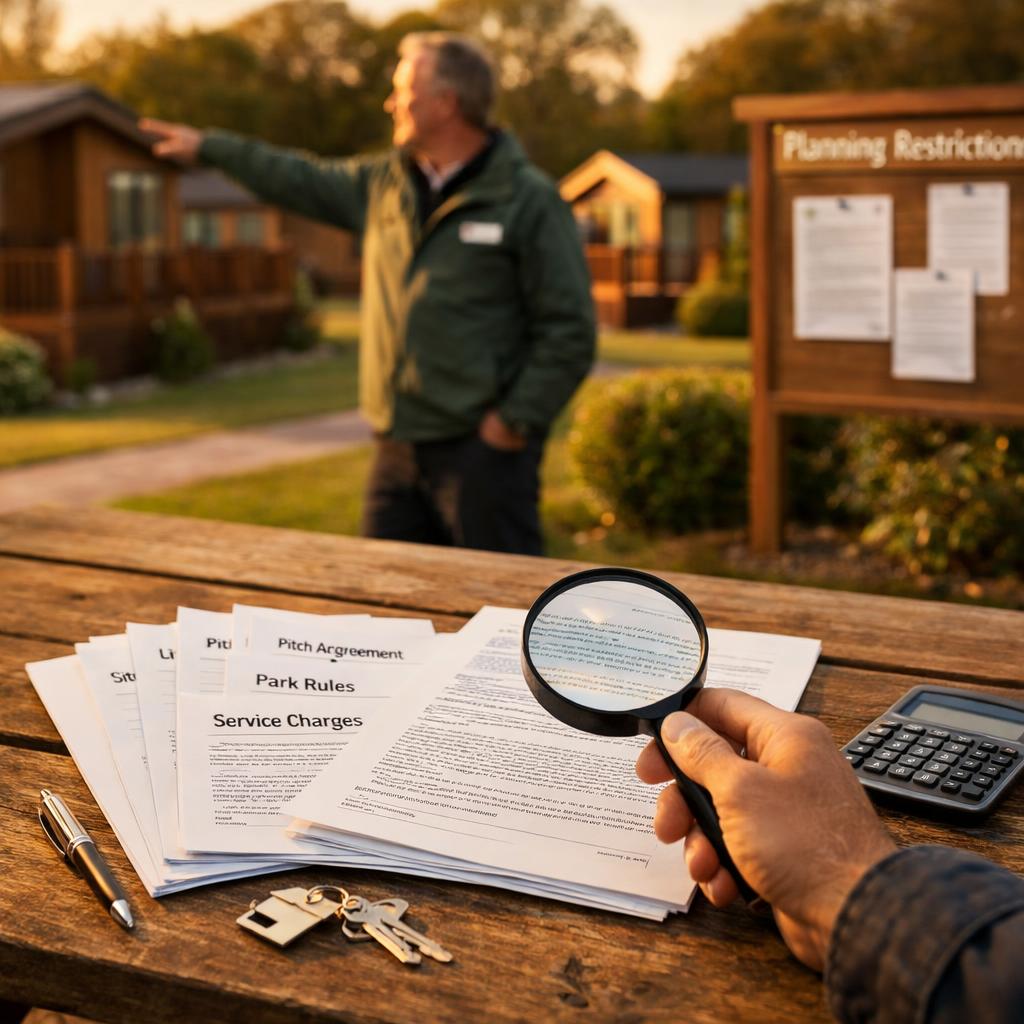
What to check before you reserve (park rules, licence, pitch agreement)
Direct answer: Before you reserve a lodge, check the park rules, the site licence, the pitch agreement, and any planning restrictions. Also verify maintenance responsibilities and service charge schedules.
Definition: The pitch agreement is the contract between you and the park. It explains fees, permitted use, termination grounds, and alteration permissions. A site licence or planning extract confirms the use status granted by the local authority.
Essential checks. Occupancy terms. Confirm holiday or residential use and any minimum stay rules. Subletting and rental rules. Some parks forbid subletting or require use of the park’s letting agent with commissions of 20%–35%. Alterations. Check who can install decking or change exterior finishes. Fees and increases. Look for fee review clauses that allow the park to raise site fees annually. Utility responsibilities. Confirm connections for mains water, drainage, and broadband. Termination and sale clauses. Understand notice periods and any transfer fees when you sell.
Red flags. Unlimited fee escalation clauses. Vague maintenance responsibilities. Absence of clear planning or licence evidence. Unclear responsibilities for major works such as road or communal drainage repairs.
How to verify. Ask the park for the most recent site licence and planning decision notice. Request example pitch agreements from current owners. Speak to on-park owners where possible. Where legal complexity exists, instruct a solicitor experienced in park home law to review documents before you commit.
Sample sentence to include in enquiries. When you request a brochure or consultation, ask the park for: “a copy of the site licence/planning extract, the current pitch agreement, and details of any planned works or fee changes in the next 12 months.” Getting those in writing protects you from surprises.
How to spot onerous pitch agreement clauses
Direct answer: Look for clauses that allow unlimited fee increases, restrict sale transfers, or impose strict subletting bans.
Common problematic clauses. Fee escalation without a cap. This allows fees to rise unpredictably. Excessive maintenance levies. These may be passed to owners unexpectedly. Long notice periods for sale approval. This can reduce resale speed. Strict alteration bans. Prevents improvements and can reduce market appeal.
What to do. Highlight these clauses to your solicitor. Negotiate amendments if possible. If negotiation fails, consider a different park. A fair pitch agreement balances park control with owner rights.
FAQs (investment, downsides, lifespan, running costs)
Direct answer: The FAQ section gives quick, evidence-backed answers to common buyer questions about luxury lodges for sale UK, such as investment potential, full-time living, life expectancy, and disadvantages.
What follows are direct responses to frequently asked questions. Each answer begins with a clear statement followed by supporting details and data. We include figures and consequences so you can make practical decisions.
Q: Are luxury lodges a good investment? A: They can be a good lifestyle investment rather than a pure financial play. Research indicates that lodges in high-demand coastal and scenic areas often show modest capital growth of 2%–6% annually in active markets. Many buyers prioritise usage value over pure return. Rental yields depend on occupancy and commission rates. Net yields for holiday lets typically range from 4%–8% gross before commissions. The consequence is that if you prioritise profit, choose parks with strong letting records and low fee escalation. If you prioritise lifestyle, choose the plot and finish that maximise your enjoyment.
Q: What is the downside of owning a holiday lodge? A: Downsides include ongoing fees, restricted occupancy at some parks, and the need for maintenance. Annual site fees can be £2,000–£9,000. Insurance and utilities add more. Some parks restrict year-round habitation. Resale can be slower than bricks-and-mortar homes and may be sensitive to park reputation.
Q: What is the life expectancy of a lodge? A: With good maintenance, modern lodges can last 25–40 years. Research shows that timber-clad units require more external maintenance. Steel-framed and composite constructions generally offer longer lifespans. Structural warranties often cover 10–20 years for specific components. Proper upkeep, such as replacing skirting or boiler parts on schedule, extends useful life.
Q: How much do running costs typically add up to? A: Running costs commonly total £3,000–£12,000 per year depending on usage and park. A part-time owner might budget £5,000 annually. A full-time occupant should budget more for utilities. Letting reduces some costs but introduces commission charges of 20%–35%.
Short answers to the People Also Ask items
Direct answer: Below are quick, direct answers to People Also Ask items with concise follow-up details.
Are luxury lodges a good investment? They are a good lifestyle investment with potential for modest capital growth. Look for parks with steady occupancy and transparent fee structures. Can I live in a lodge all year round in the UK? Only if the park’s licence and planning permission allow residential occupation. Confirm in writing. What is the life expectancy of a lodge? Expect 25–40 years with regular maintenance and component replacements. What is the downside of owning a holiday lodge? Downsides include ongoing fees, possible occupancy restrictions, and potential resale volatility.
These short answers help you triage which topics need deeper legal or financial checks before you reserve. Always request documentary proof for occupancy rights and fee history.
Next steps: viewings, brochure, and speaking to WPHG
Direct answer: The next steps are to request a brochure, book park viewings, and arrange a consultation with White Park Home Group for personalised guidance. This will speed decisions and reduce risk.
What to request: Ask for a detailed brochure showing on-park lodge stock, pitch plans, and example pitch agreements. Request current site fee schedules and any planned fee changes in the next 12 months. Ask for the park’s site licence or planning extract.
How White Park Home Group helps. White Park Home Group offers tailored consultations, park recommendations, and support through the buying process. For a start, visit White Park Home Group and request a brochure. WPHG can also arrange viewings and put you in touch with solicitors experienced in park home contracts.
Practical viewing checklist. Inspect the lodge interior and exterior for damp, structural movement, and condition of windows and roof. Test heating and hot water. Check broadband speed. Walk the pitch at different times of day to assess noise and activity. Ask current owners about park management and fee increases.
Videos and walkthroughs. For real-world tours and buyer perspective, watch an in-depth review of a Prestige Plantation Lodge to gauge finish and price expectations:
. Also view a reduced-price 40 x 20 lodge walkthrough to compare older stock conditions and renovation needs:
. Videos boost buyer insight and help you decide whether a new or pre-owned lodge fits your goals.
Final actions. Compile your questions into an email and request the key documents before paying any deposit. Book a consultation with White Park Home Group for tailored park matches and assistance in interpreting pitch agreements. A guided approach typically reduces purchase surprises and speeds safe completion.
How to request a brochure and what to ask for during a consultation
Direct answer: When requesting a brochure, ask for the full price list, pitch maps, site licence, example pitch agreement and any recent fee increases. During a consultation, ask for region-specific comparisons and expected running costs.
Brochure request checklist. Current price list with VAT status. On-park pitch maps showing views and orientation. Recent sample pitch agreements. Site licence or planning extract. Estimated annual running costs and sample invoices. Consultation topics. Park comparisons by region, typical resale timelines, local amenities, and finance options. WPHG can tailor the consultation to your priorities, whether that is rental income or lifestyle usage.
These requests give you the documentary evidence to compare parks objectively and help solicitors and lenders make decisions faster.
Key Takeaways
- Luxury lodges for sale UK range from affordable pre-owned units to bespoke new models costing £120k–£350k. Choose based on use and budget.
- Confirm park licence and planning status before reserving; approximately 60%–75% of parks restrict lodges to holiday use.
- Budget for ongoing annual costs of £3,000–£12,000 including site fees, utilities, insurance, and maintenance.
- Compare total cost of ownership when choosing new vs pre-owned. Pre-owned can be 30%–60% cheaper upfront but may need more work.
- Request a brochure, the site licence, and a sample pitch agreement, then book viewings and a consultation with White Park Home Group to progress safely.
Frequently Asked Questions
Are luxury lodges a good investment?
Short answer: Luxury lodges can be a good lifestyle investment but are rarely a quick financial win. They often deliver modest capital growth and consistent personal use value.
Elaboration: Studies and market data show lodges in high-demand coastal and scenic regions commonly appreciate around 2%–6% per year in active markets. Rental potential varies; gross rental yields for holiday lets can range from 4%–8% before commissions. If you rely on rental income, choose parks with proven occupancy and transparent letting agreements. For buyers prioritising lifestyle, the non-financial return—regular holidays and convenience—often outweighs slow capital appreciation.
Can I live in a lodge all year round in the UK?
Short answer: Only if the park’s licence and local planning permission permit residential occupation. Many parks restrict lodges to holiday use only.
Elaboration: Industry estimates indicate roughly 60%–75% of UK parks enforce holiday-only restrictions. Before you reserve, request the site licence and planning extract from the park. Confirm council tax implications and whether mortgage lenders will finance a lodge on that pitch. If full-time living is essential, focus on parks that advertise residential pitches and provide clear documentary proof.
What is the life expectancy of a lodge?
Short answer: Modern lodges typically last 25–40 years with proper maintenance and periodic component replacements.
Elaboration: The expected life depends on frame type, cladding, and maintenance. Timber-clad units require more frequent external care. Steel-framed and composite builds often last longer. Manufacturers may offer 10–20 year warranties on structures or specific components. To extend lifespan, budget annually for maintenance and replace key systems such as boilers and skirting when needed.
What is the downside of owning a holiday lodge?
Short answer: The main downsides are ongoing fees, possible occupancy restrictions, and resale sensitivity to park reputation and fee changes.
Elaboration: Annual site fees commonly run from £2,000 to £9,000. Insurance and utilities add further costs. Some parks do not permit full-time living. Resale can be slower than traditional houses and affected by the park’s maintenance, management, and local demand. If you plan to let, commission rates from 20%–35% will reduce net returns. Check all fees and rules in writing before you buy.
Enquire now